Every discovery campaign starts from something. Sometimes it is only a target: a hardness, a temperature, a price. Sometimes it is a material your team already makes and wants to push further. And sometimes, before you trust an engine with an open question, you want to watch it reach an answer you already know.
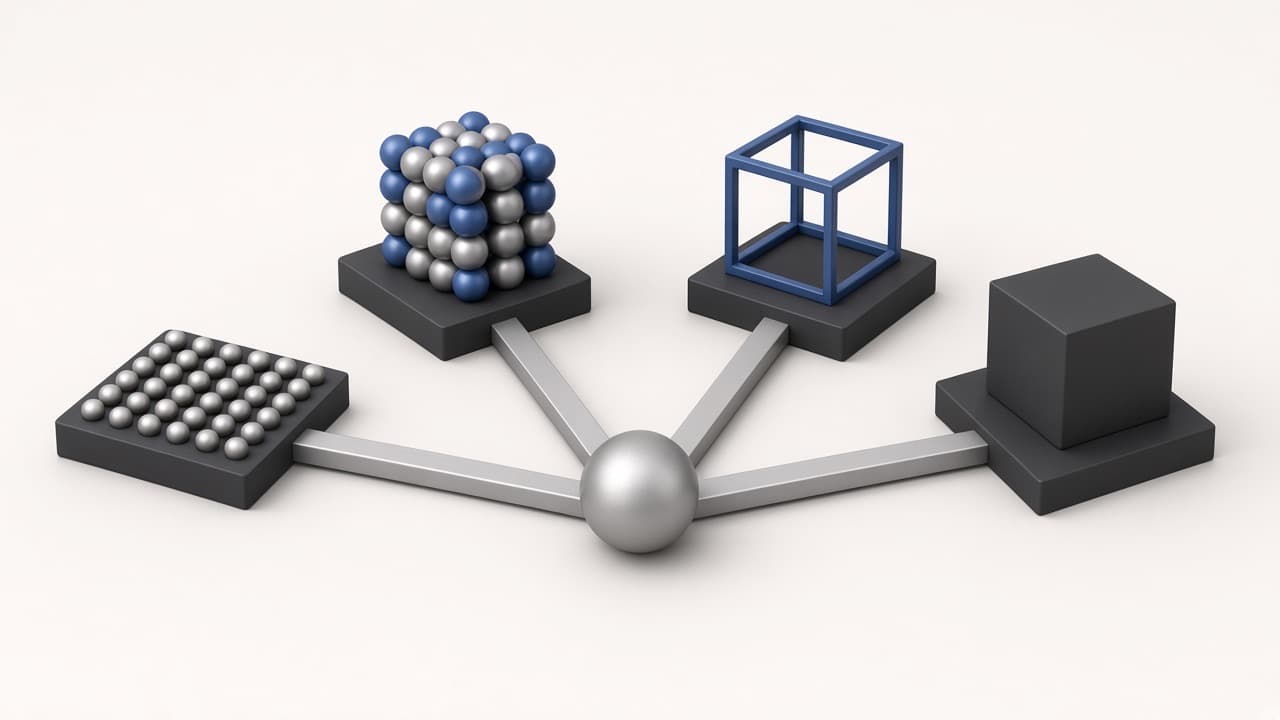
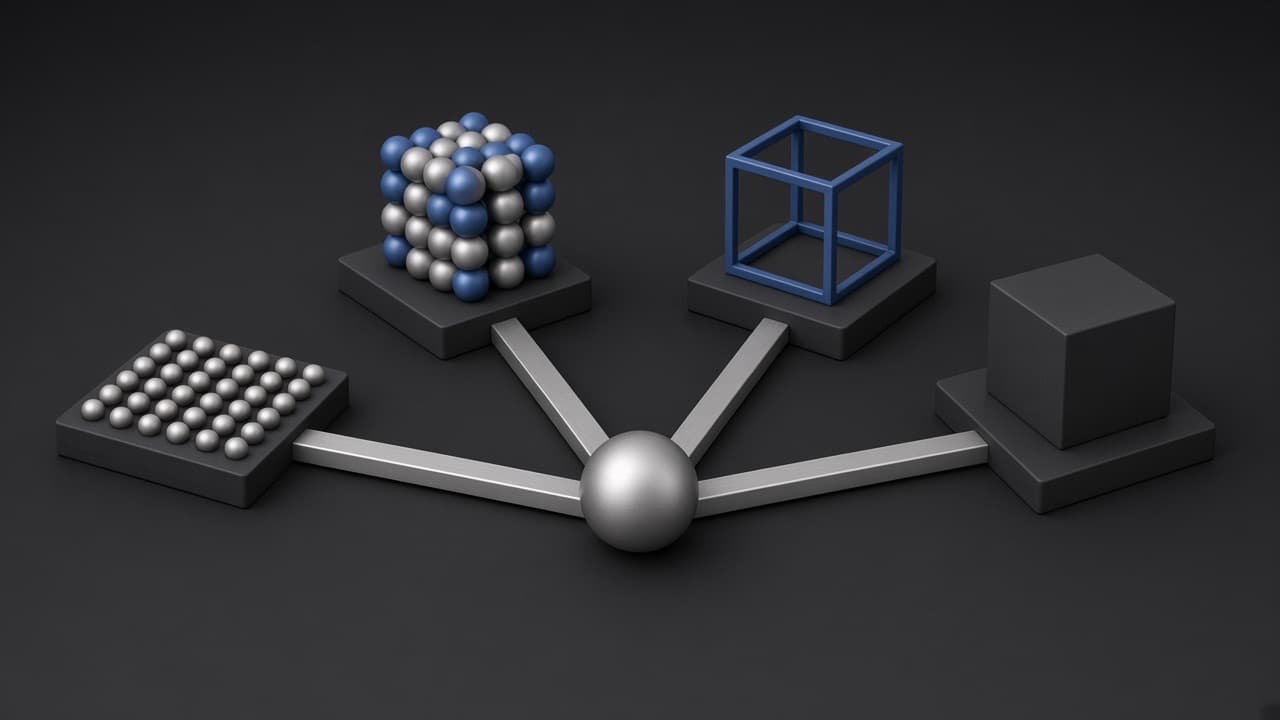
MS Lattice treats these as four modes on one engine: Open Discovery, Prototype-Guided Optimization, Guided Rediscovery and the Blind Rediscovery Benchmark. All four run in all twenty-three material domains, from your own agent, the API, the SDK or the command line. This guide sets out what each mode takes, what it does and what you get, when each fits, and how teams combine them.
Choose by what you already have
The simplest way to choose is to start from what you have in hand, and from how much of the answer the engine should see while it searches.
- A target, and nothing to start from: Open Discovery. The engine sees only your target.
- A material to improve: Prototype-Guided Optimization. The engine sees your target and your structure.
- Targets as guides: Guided Rediscovery. The engine sees the known targets, as guides.
- Targets kept sealed: the Blind Rediscovery Benchmark. The engine sees none of the targets, until the freeze.
The first two modes find and improve materials. The other two prove the engine: they point it at answers that are already known, in plain view or under seal, so its arrival can be measured. Between them, they cover the range of questions a materials program asks, from which material to make next to whether the engine deserves your lab’s time.
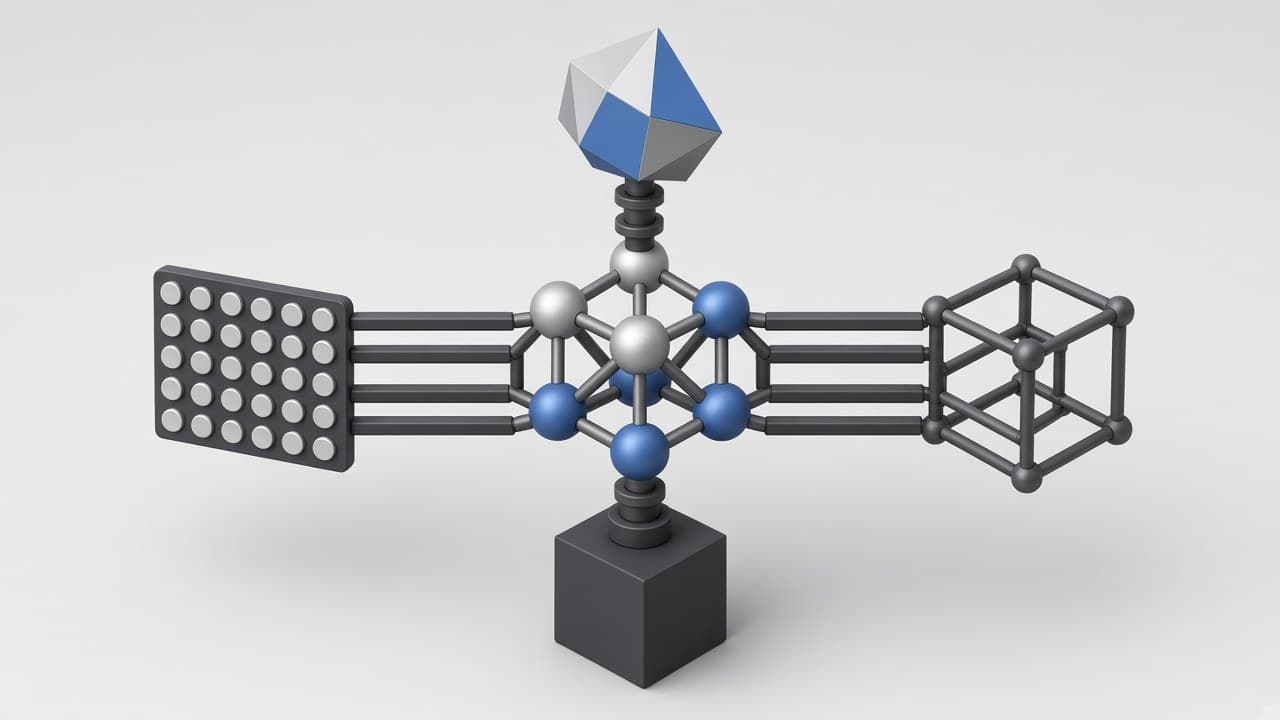
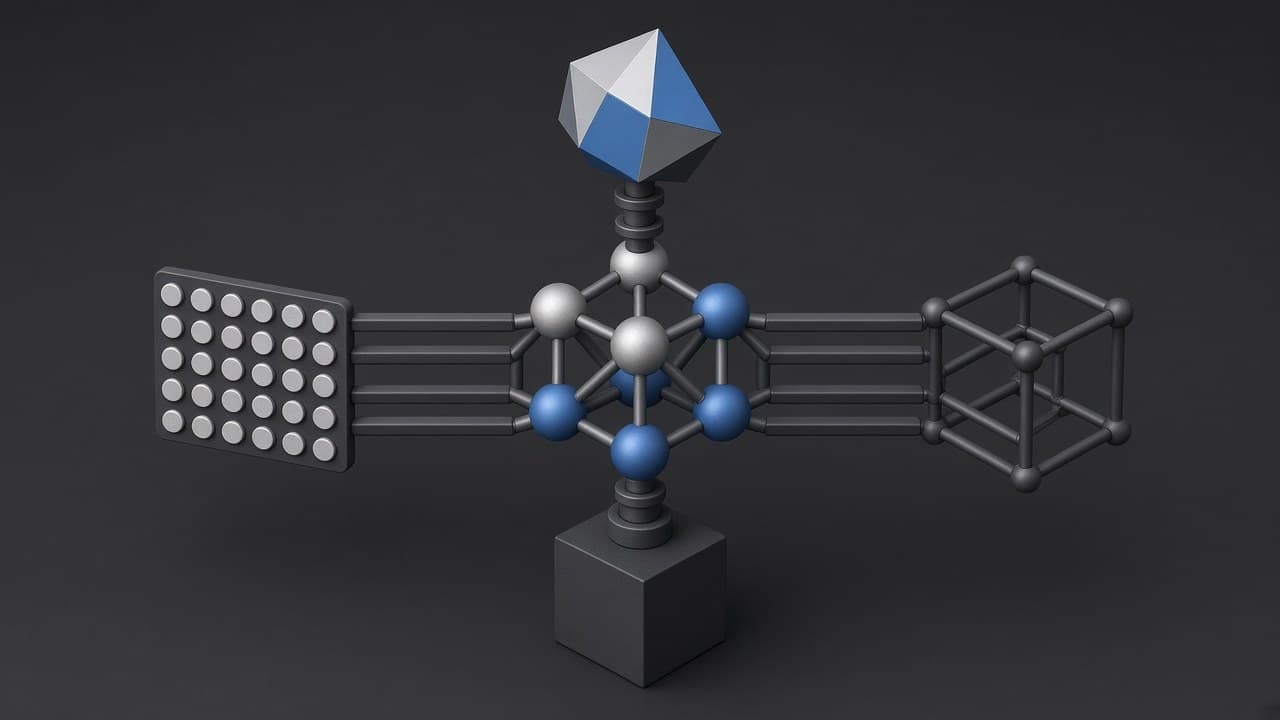
Open Discovery: a target, and nothing to start from
Choose Open Discovery when you have a target, not a starting structure. You give it a domain, a goal preset or your own targets, and a budget. It searches the whole composition space and hands back a ranked, diverse set of candidates, each with its record. It is best for new materials, from the target alone.
This is inverse design in its plainest form. The example on record is a machining coating described by three numbers: 28 GPa, 800 °C and $30 a kilo. No starting structure was given, and (Ti,Al)N and (Cr,Al)N, the coatings the industry runs on today, landed in the top five. An engine that reaches the industry’s own answers from the job alone gives you a reason to look hard at the rest of its shortlist.
Open Discovery fits when a new product needs a material your team has never worked with, when a supply problem rules out the element your current material depends on and you want to see the field afresh, or when you want a broad first look across a domain before committing to a family. The diversity is on purpose: the shortlist gives you different strong answers, not one family of near-copies.
Prototype-Guided Optimization: a material to improve
Choose Prototype-Guided Optimization when you have a good material and want it better. You give it a starting structure and what to improve. It searches around your structure and tracks every variant against the original, and you get variants ranked against your prototype. It is best for taking the material you use today further.
Much industrial materials work looks like this. A material already in production carries years of process knowledge, supplier relationships and test history, so changing it is expensive, and the best change is often a small one: a substitution that holds a property at a higher temperature, cuts a scarce element or lowers cost while keeping everything else close. Because every variant is tracked against the original, your team sees what each one gains and what it gives up.
The example MS Lattice gives is today’s automotive magnet, searched for variants that hold their strength at motor temperature. The same pattern fits a cathode you want with less cobalt or a coating that has to survive a hotter cut. You do not need a completely new material to start: begin with the one you have and make it better.
The rediscovery modes: guided and blind
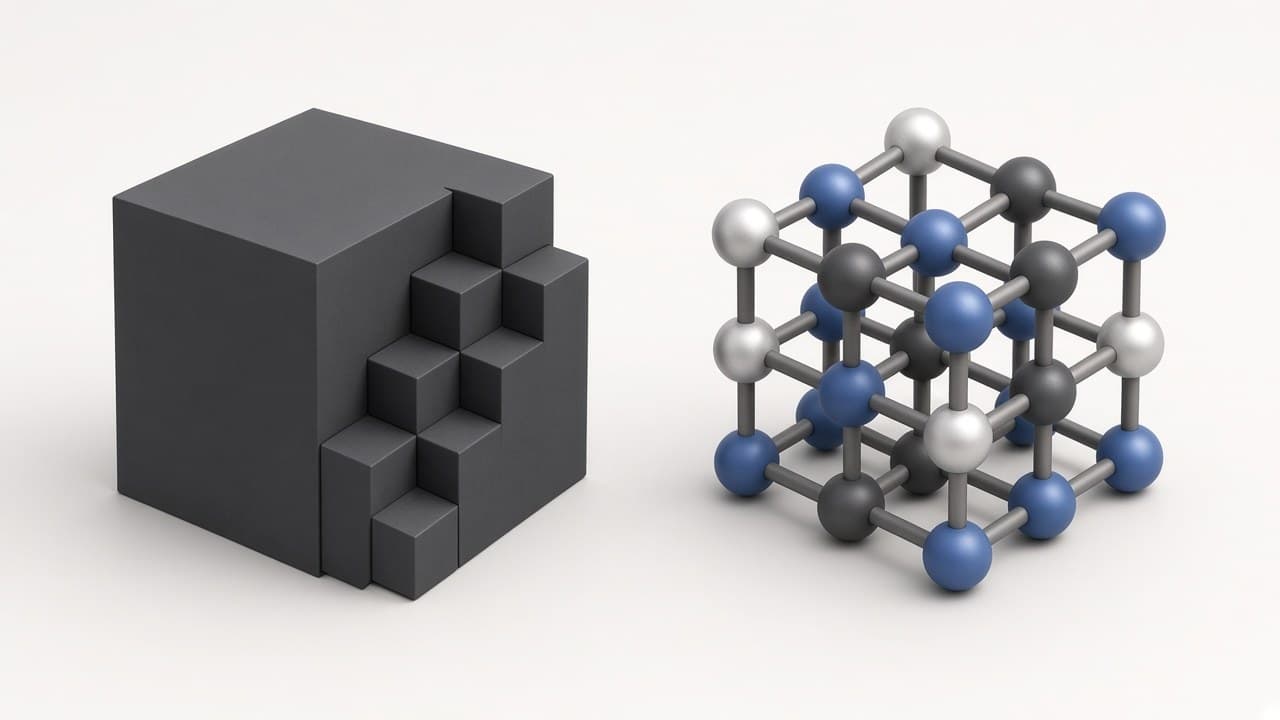
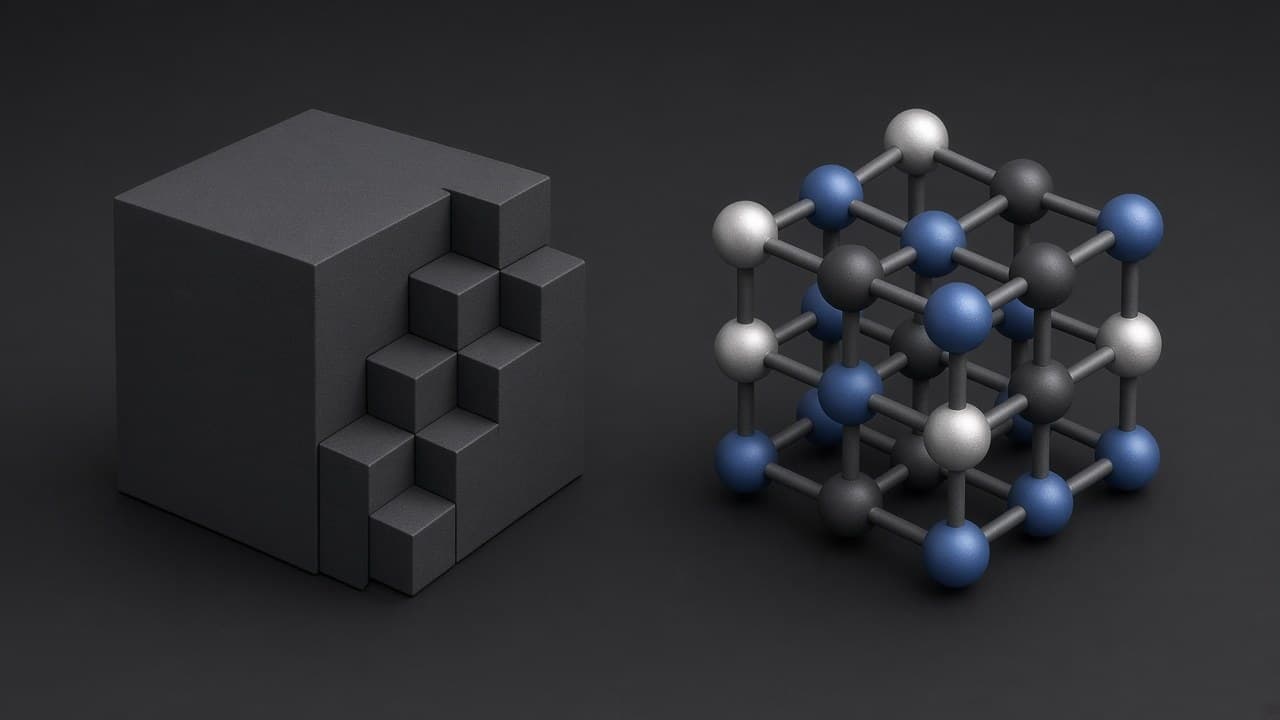
The two rediscovery modes answer a different question. They do not look for something new; they show how well the engine reaches something known, so your team can judge how far to trust it before pointing it at the unknown.
Guided Rediscovery
Choose Guided Rediscovery to point the engine at a known material and watch it arrive. You give it known target structures. It lets the targets guide the search and scores how closely every candidate reaches them, and you get a match level for every target. Steered toward zirconium diboride, every one of the 14 scored candidates matched it at every level, in a campaign of about three minutes, the closest within 0.0008 Å.
It fits early in an evaluation, when your team wants to see the engine reach a material it knows well, or as a short first campaign that shows colleagues how candidates, match levels and records read before you spend a round on an open question.
The Blind Rediscovery Benchmark
Choose the Blind Rediscovery Benchmark to seal the answer and see if it comes back. You give it sealed targets, hidden from the engine while it searches and ranks. It searches without the answers, freezes the candidates, then reveals the targets and scores the match, and you get a graded verdict for every target. A leak check confirms each match was found, not remembered; a match from anything that had seen the target is never called blind.
On the record, two sealed ultra-high-temperature ceramics were both found, down to the arrangement of their atoms, among 64 candidates in two rounds, in 32 minutes, for under 20 cents. Re-run end to end, 9 of 9 checks passed. Choose it before you rely on the engine in a new domain, when a reviewer or customer wants evidence they can check, or when you want to compare engines on equal terms.
Combining modes across rounds
Most programs do not pick one mode and stop. A campaign ends with a shortlist and a record, and the next round starts from what you kept: keep the winner, tighten the target, run again. A common sequence looks like this.
- Prove it on what you knowRun Guided Rediscovery or the Blind Rediscovery Benchmark on materials your team already understands in the target domain. The match levels and graded verdicts tell you how far to trust the engine there.
- Open the questionRun Open Discovery from the target alone, with your requirements and preferences, for a ranked, diverse set of candidates.
- Check what mattersSend the candidates you choose for first-principles verification of stability, elastic constants or phonons before anything goes to the lab.
- Refine the bestTake the strongest candidate, or the material you already make, as the starting structure for Prototype-Guided Optimization, and rank its variants against it.
- Hand over to the labExport the shortlist as structure files with their records for your lab, or let Norck synthesize, validate and manufacture the winner.
Teams with a material already in production often run the order the other way: Prototype-Guided Optimization first, to see how far today’s material can go, then Open Discovery if the gap to the target is still too wide. Every mode runs on the same engine and every candidate carries the same kind of record, so one round reads the same way as the next. Your AI agent can run the sequence too: over MCP it builds each plan, sees the price first and reads back the candidates, for campaigns of minutes or of weeks.
What the results on record tell you
- 14 of 14candidates on target in Guided Rediscovery
- 0.0008 Åthe closest candidate to zirconium diboride
- 2 of 2sealed targets found blind
- < $0.20for the blind run of 64 candidates
The two rediscovery results answer different questions. Guided Rediscovery shows that when the engine is shown where the answer is, it gets there precisely and quickly. The Blind Rediscovery Benchmark shows something harder: that it gets there without being shown. Read alongside the formula result, the right structure ranked first for 13 of 15 compounds from a formula alone, they are the reason to take an Open Discovery shortlist seriously enough to spend lab time on it.
Questions teams ask
Which mode should we start with?
Start from what you have. A target and nothing else points to Open Discovery; a material you make today points to Prototype-Guided Optimization. If your team first wants to see the engine work in your domain, start with Guided Rediscovery or a blind benchmark on materials you know.
Do all four modes work in every domain?
Yes. All four modes run in all twenty-three domains, from your own agent, the API, the SDK or the command line.
Can we run a blind benchmark on materials we know?
Yes. The targets stay sealed while MS Lattice searches and ranks, the candidates are frozen, and only then are the targets revealed and every match graded.
Do we need a completely new material to get value?
No. Start with the one you have and make it better. Prototype-Guided Optimization is built for that.


MatterSpace’s first domain engine
MatterSpace built MS Lattice for the scientists and engineers who discover and design new materials, starting from the properties their product needs.