What MS Duplex delivers, in numbers.
Each number beside what it beat: the model on its own, a cache, retrieval or fine-tuning.


Internal benchmarks. Every figure on this page comes from tests MatterSpace ran itself and has not been independently verified. Read the disclaimer
- −90.3%*Model calls, with accuracy up94.6% accurate, against 59.8% for the model alone
Model calls in 3,000 decisions The model with MS Duplex 277 The model alone 2,864 - 0%*Stale answers after a rule changeCache and retrieval: 72%
Stale answers after a rule change MS Duplex 0% Cache and retrieval 72% - 6 / 6*Tests where MS Duplex beat fine-tuning+30.3 points on average, with no training run
- 3 / 3*Frontier models beaten at predicting system changesOn a public enterprise benchmark, with no model calls
System-change prediction score MS Duplex 0.256 Gemini 3 Pro 0.205 Claude Sonnet 4.5 0.204 GPT-5.1 0.166
* Figures from MatterSpace’s internal benchmarks, not independently verified. Read the disclaimer
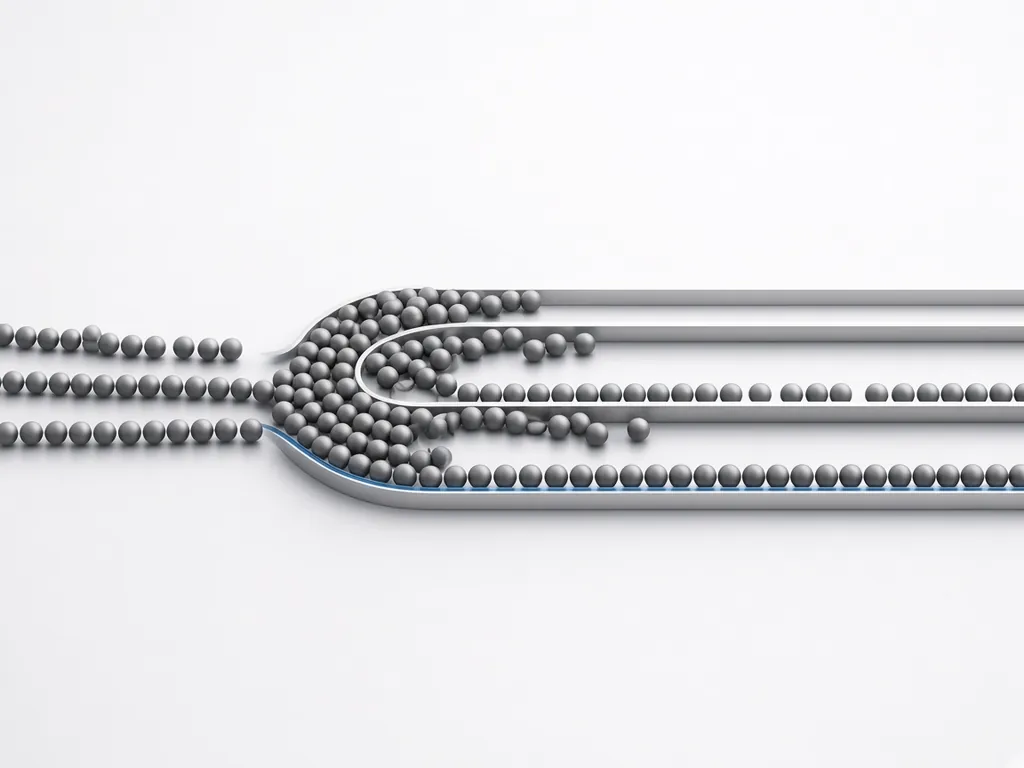
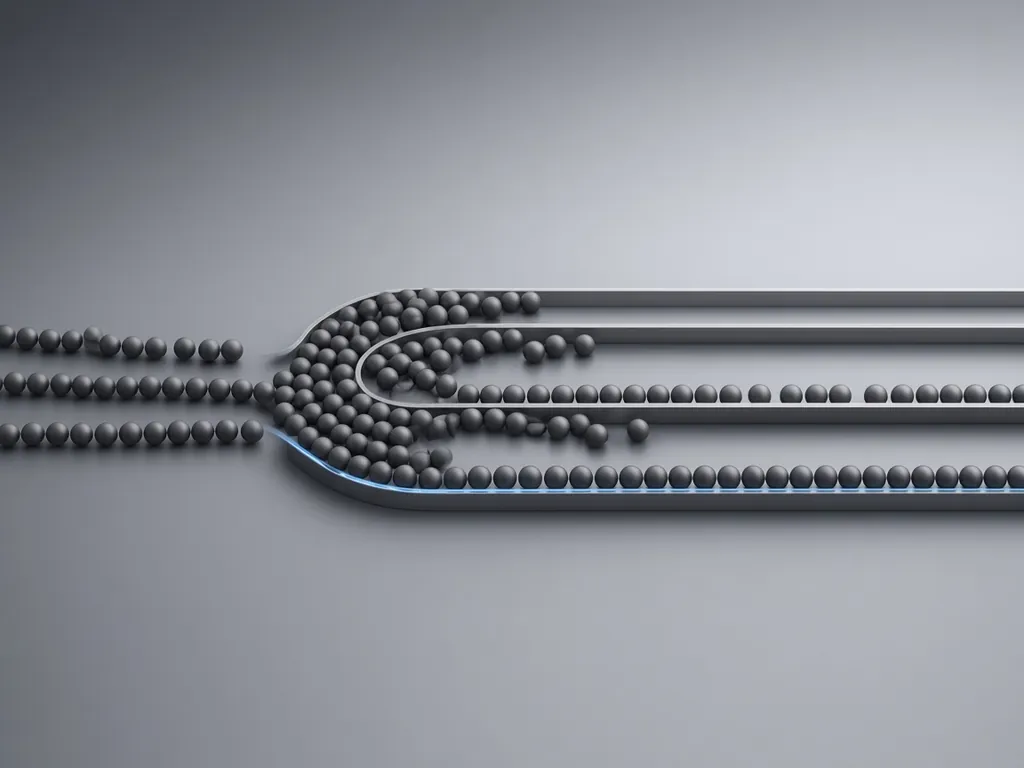
One stream of 3,000 decisions, three ways.
Step 1 of 3: Accuracy


Every result.
* Figures from MatterSpace’s internal benchmarks, not independently verified. Read the disclaimer
90% fewer model calls, and more accurate.*
94.6%*Accuracy, the highest in the testThe model alone 59.8% · with a cache 77.3%Accuracy, the highest in the test The model with MS Duplex 94.6% The model with a cache 77.3% The model alone 59.8% - −90.3% Model calls · −84.8% cost · −81.9% latency*
- ~23× Faster once learned · ≈97 ms against ≈2,231 ms*
A 3,000-decision stream in which the rules changed five times, against the frontier model alone and with a semantic cache; a 300-decision run added a cache with retrieval and a knowledge graph. Every approach used the same model.
More accurate at every setting, at a seventh of the cost.
94.1 to 94.8%*MS Duplex accuracy, at every one of eight settingsThe best a cache reached: 77.3%MS Duplex accuracy, at every one of eight settings MS Duplex 94.1 to 94.8% The best a cache reached 77.3% - 84 to 91% On three fresh runs of 1,000 decisions · The best a cache reached: about 73%*
A 3,000-decision stream with every approach swept across its full range of settings, then three fresh runs of 1,000 decisions in a second, independent setup.
Keeps learning without forgetting, going stale or growing.
5 / 5*Requirements for learning in production, all met on every runCache and retrieval averaged 2.2 / 5 · online fine-tuning 4 / 5Requirements for learning in production, all met on every run MS Duplex 5 / 5 Online fine-tuning 4 / 5 Cache and retrieval 2.2 / 5 - 0% Stale answers after a policy change · Cache and retrieval 72%*
- Fixed Footprint over time · Cache and retrieval grew to ≈1,300 rows*
Ten runs, with the same supervision and the same inputs for every approach.
Handles new wording, and spots the look-alikes.
7.5%*Wrong answers on look-alike requestsA cache 45.3%, about 6× moreWrong answers on look-alike requests MS Duplex 7.5% A cache 45.3% - 98.98% Of requests handled correctly: answered right, or handed to your AI · MS Duplex answered 95.78% of known requests itself*
- 0.996 Score for telling familiar from new, out of 1 · A cache 0.930*
Ten learned intents and six levels of novelty, from exact repeats to requests from another domain, over ten runs.
Plans the shortest route, with zero model tokens.
100%*Plan success, on every runA reactive agent: 0% · MS Duplex used no model tokensPlan success, on every run MS Duplex 100% A reactive agent 0% A multi-step world over ten runs, against a reactive agent and a frontier model given the same task.
Keeps agent tasks succeeding, with fewer model calls.
83.3%*Task successThe model on every turn: 82.5%Task success MS Duplex 83.3% The model on every turn 82.5% Τ-bench (tau2-bench), retail, by Sierra Research. The unmodified retail environment, with the same model, tools and user simulator for every approach, over three runs of forty episodes.
A steady reading cost, however long the history.
- 3.7× Less reading per question than reading the whole history · At forty sessions of history*
- 84% Accuracy at forty sessions of history*
LongMemEval, by Wu et al., ICLR 2025. Fifty questions, each asked with the history at 2, 5, 10, 20 and 40 sessions.
Blocks every attack, and lets ordinary work through.
- 0.7% False refusals · The lowest of any approach that blocked every attack*
- 40 / 40 Poisoned samples removed · Accuracy back within 1 point*
Six attack families, paraphrased, with harmless requests written to resemble the attacks.
Learns a new skill on its own, with the model switched off.
- 0.26 ms To reuse a skill · At 0 model calls*
- 627 Unsafe actions refused per run · And the safe skill was still learned*
Four suites over ten runs, each scored by its worst run.
Beat three frontier models at predicting system changes.
0.256*System-change prediction scoreGPT-5.1 0.166 · Gemini 3 Pro 0.205 · Claude Sonnet 4.5 0.204System-change prediction score MS Duplex 0.256 Gemini 3 Pro 0.205 Claude Sonnet 4.5 0.204 GPT-5.1 0.166 - $0 Model spend · 570 predictions at zero calls; 84 on a frontier model cost $13.40*
- ~80% Decisions answered from what it learned · Your AI took the rest*
World of Workflows, by Skyfall Research / ServiceNow. Three offline tracks, scored by the benchmark authors’ own evaluator, over three runs.
Beats fine-tuning, with no training run.
- 0 Retraining to move to another model family · The adapters moved in 0 of 6*
- 60 to 79% Answered from what it learned · On either model family*
Three public intent datasets, two open model families and three runs, with the same frozen model and data for every approach.

See it on your own work.
From your own assistant to every agent your company runs, a pilot puts MS Duplex on your own work, with the measures agreed before it begins.