

Ultra-high-temperature ceramics.
For the hottest places in flight.
Name the temperature, the oxidation limit and the weight. MS Lattice names the ceramic.
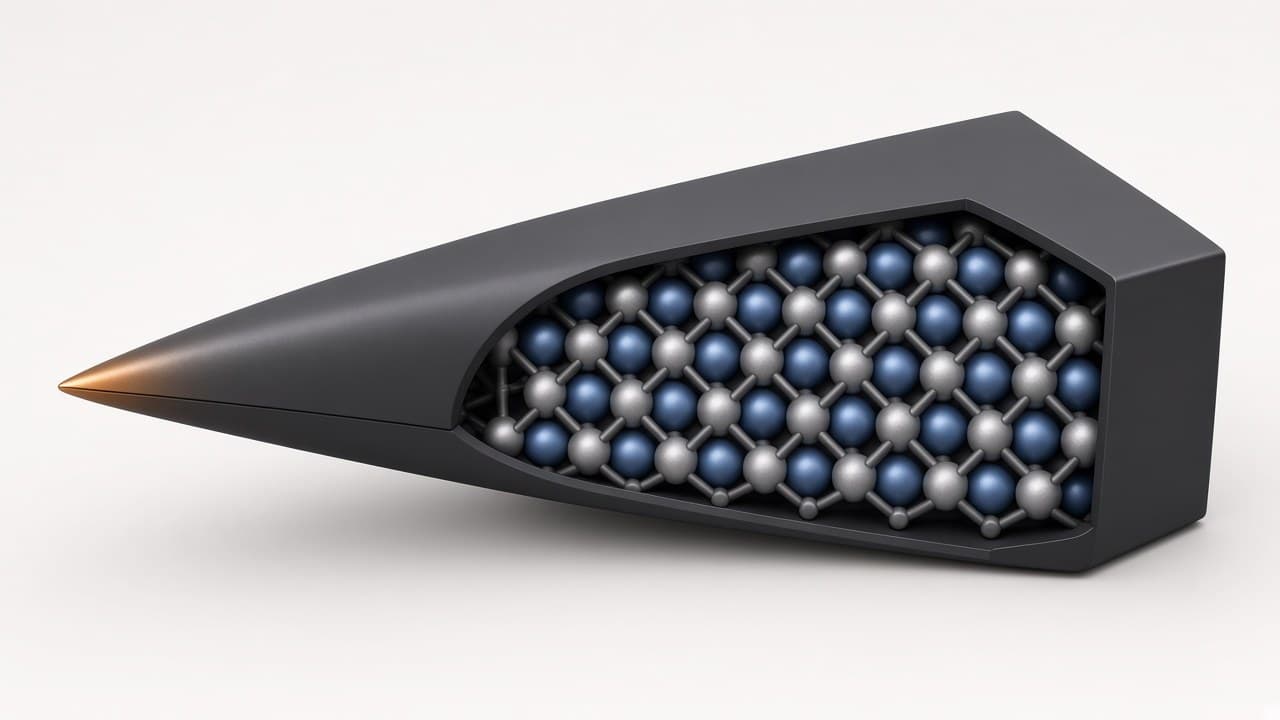
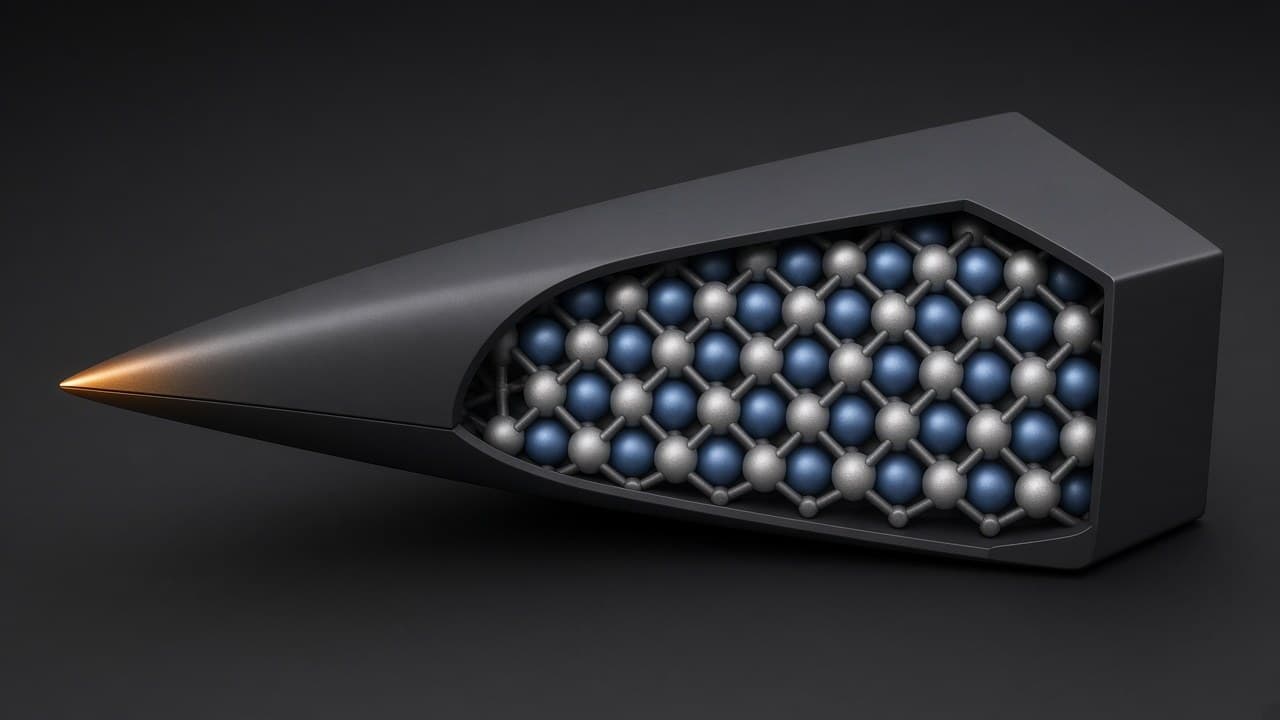
- Hypersonic leading edges
- Rocket nozzles
- Thermal protection
Proof.
Both sealed targets found blind: 64 candidates, 32 minutes, under 20 cents. 14 of 14 candidates on target for zirconium diboride, in about three minutes.
The material groups.
Each group brings its own structures and chemistry to the search.
Rock-salt carbides
Among the highest-melting materials known.
Diboride composites
Built to resist oxidation.
High-entropy carbides
Several metals, one structure.
High-entropy diborides
Harder still.
What you can aim for.
Set the properties that matter. Say what a candidate must meet and what it should push for, with cost and supply in view.
- Melting point
- Oxidation resistance
- Thermal-shock resistance
- Thermal conductivity
- Density
- Cost and supply
Starting points.
Start from a proven preset, or set your own targets.
Leading-edge composites
Diboride composites for hypersonic leading edges.
Highest-melting carbides
The most refractory carbides.
High-entropy ceramics
Carbides and diborides of several metals.
Low-cost refractories
Refractory ceramics at lower cost.
Rocket nozzle inserts
Ceramics for rocket nozzle throats.
Four modes, in every domain.
Search from the target alone, improve a material you have, or watch the engine find sealed targets blind.
Open Discovery
You have a target, not a starting structure.
Prototype-Guided Optimization
You have a good material. Make it better.
Guided Rediscovery
Point it at a known material. Watch it arrive.
Blind Rediscovery Benchmark
Seal the answer. See if it comes back.
Every candidate, with its record.
Each candidate comes ranked against your targets, with its estimated properties and their uncertainty, the checks it passed and a structure file to export, ready for your lab.
Stop guessing which crystal to make. Ask for it.
Tell us the domain and what the material must do. License MS Lattice for your team, or let Norck take the discovery all the way to finished parts.