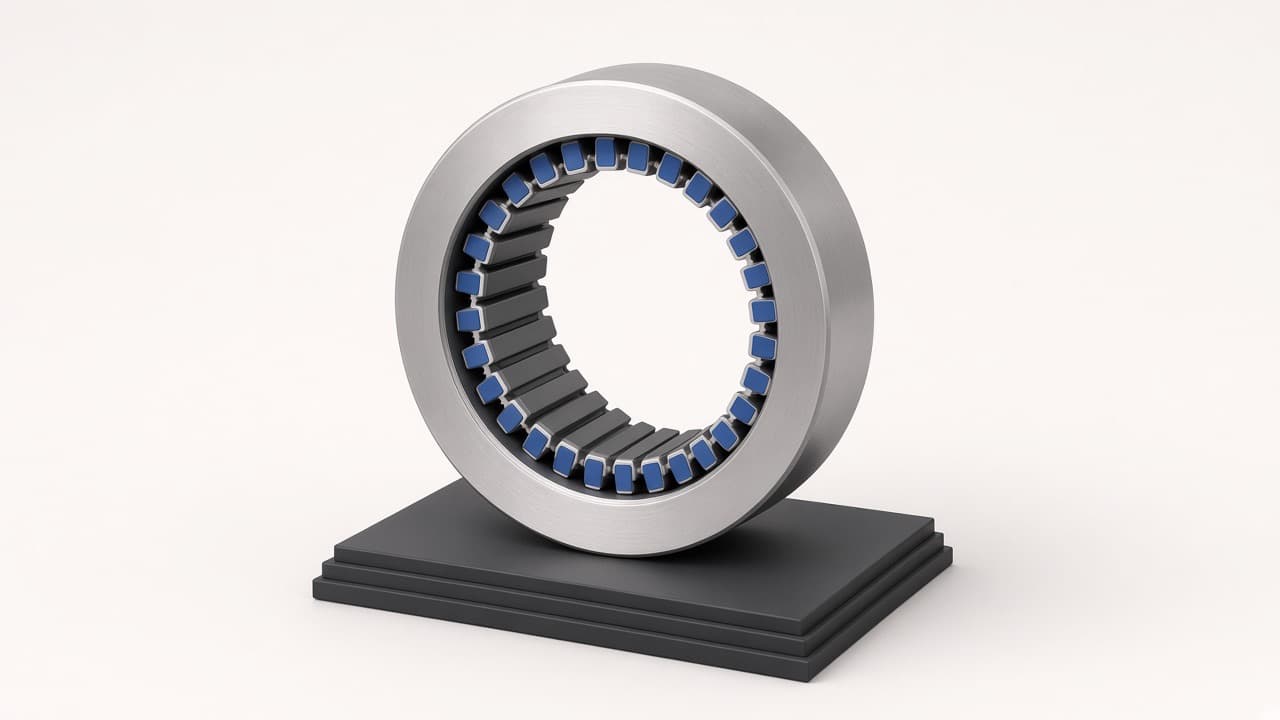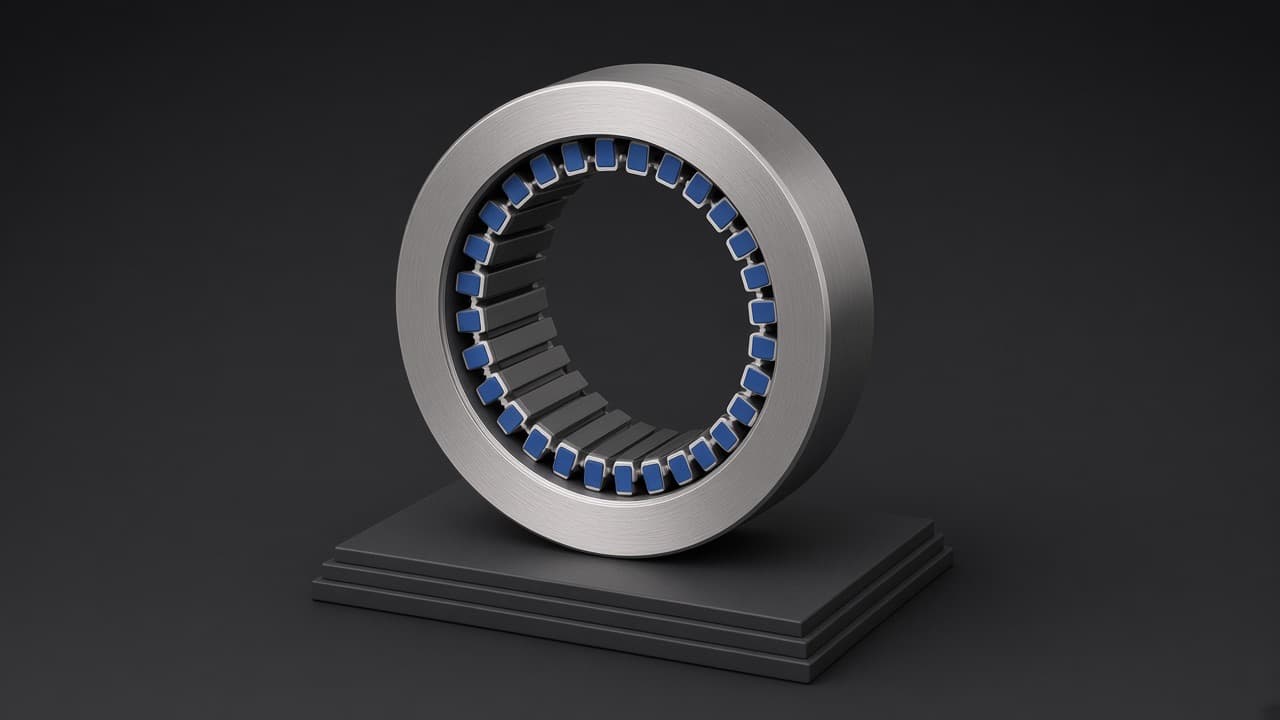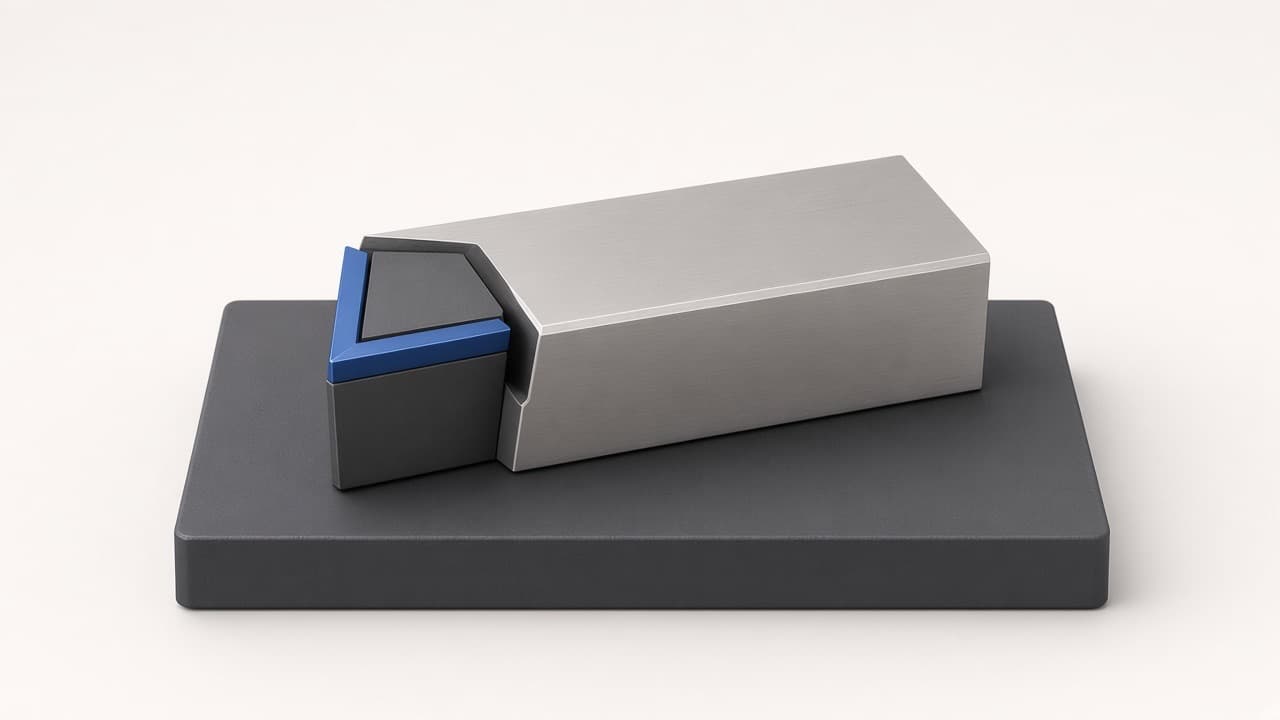
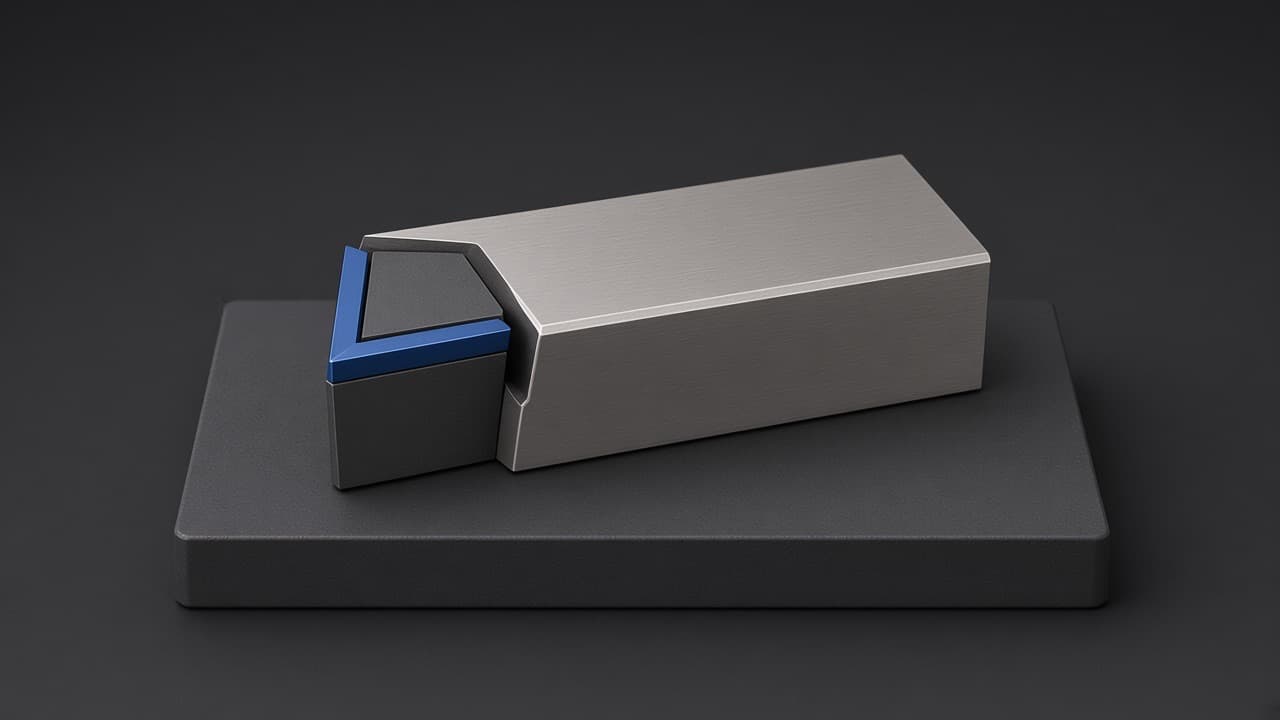
A coated cutting tool is a thin layer of ceramic doing very hard work. A few micrometers of nitride on a carbide insert take the contact pressure, the friction and the heat of the chip, and the life of the tool is mostly the life of that layer. When a shop raises cutting speed or takes the coolant away, the coating is the first thing that has to change.
This post is for tooling engineers, coating developers and machining shops. It covers how tools wear, why dry, high-speed machining raises the bar, what MS Lattice returned when it was handed the job in one sentence, what a campaign in the hard-coatings and oxidation-resistant-coatings domains can aim for, and how a shortlist becomes a coated tool.
How a cutting edge wears
Tool wear is several mechanisms at once, and the one that ends a tool’s life depends on the workpiece, the speed and the cut.
- Abrasion: hard particles in the workpiece scratch the flank of the tool, the steady wear that hardness resists best.
- Adhesion: material from the chip welds to the edge and tears away, taking coating with it, common in soft and sticky alloys.
- Diffusion and crater wear: at high temperature, elements move between the tool and the hot chip and hollow out the rake face.
- Oxidation: where air reaches the hot edge, the coating reacts and loses hardness unless it grows a protective oxide.
- Thermal cracking and chipping: interrupted cuts such as milling heat and cool the edge many times a second, and a mismatch in thermal expansion between coating and substrate turns that into cracks.
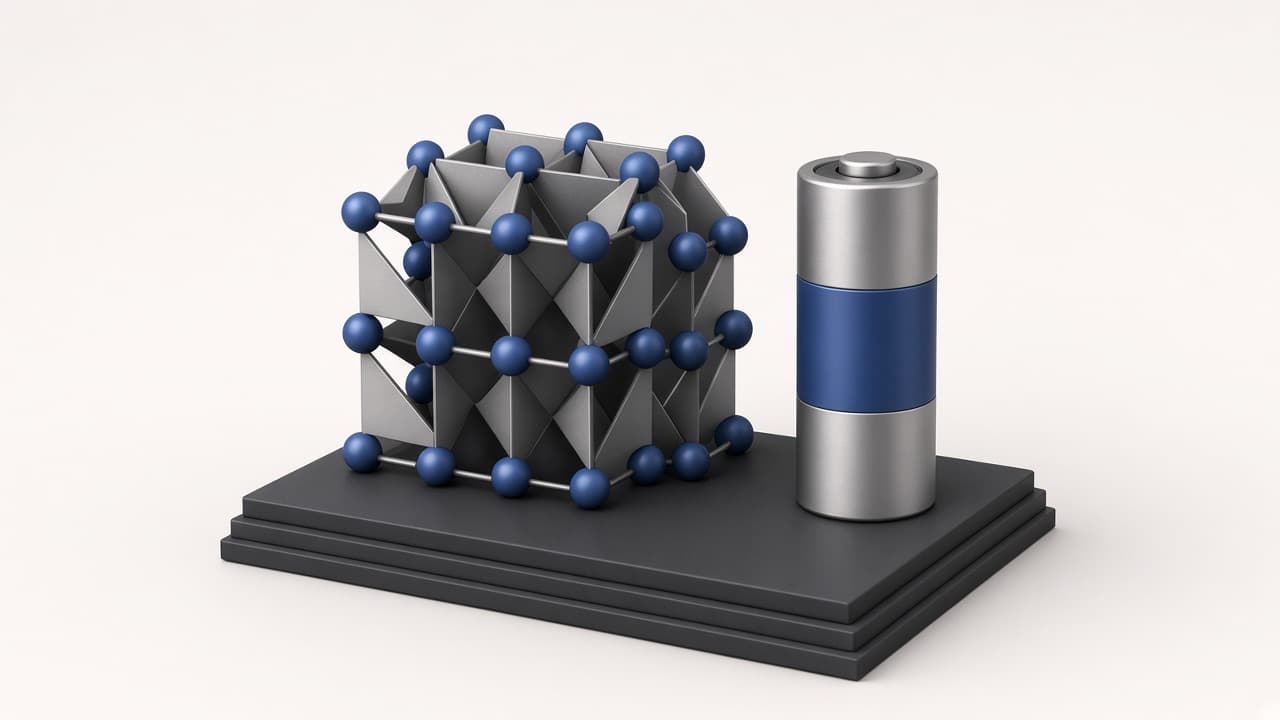
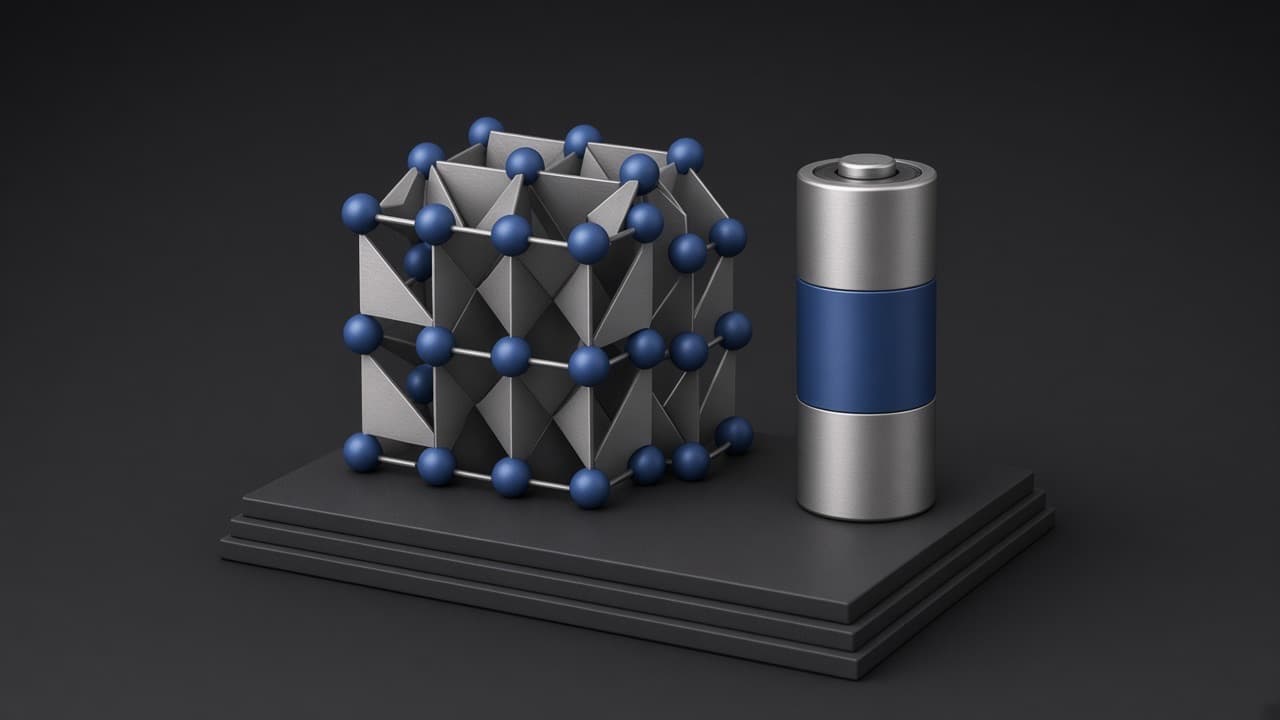
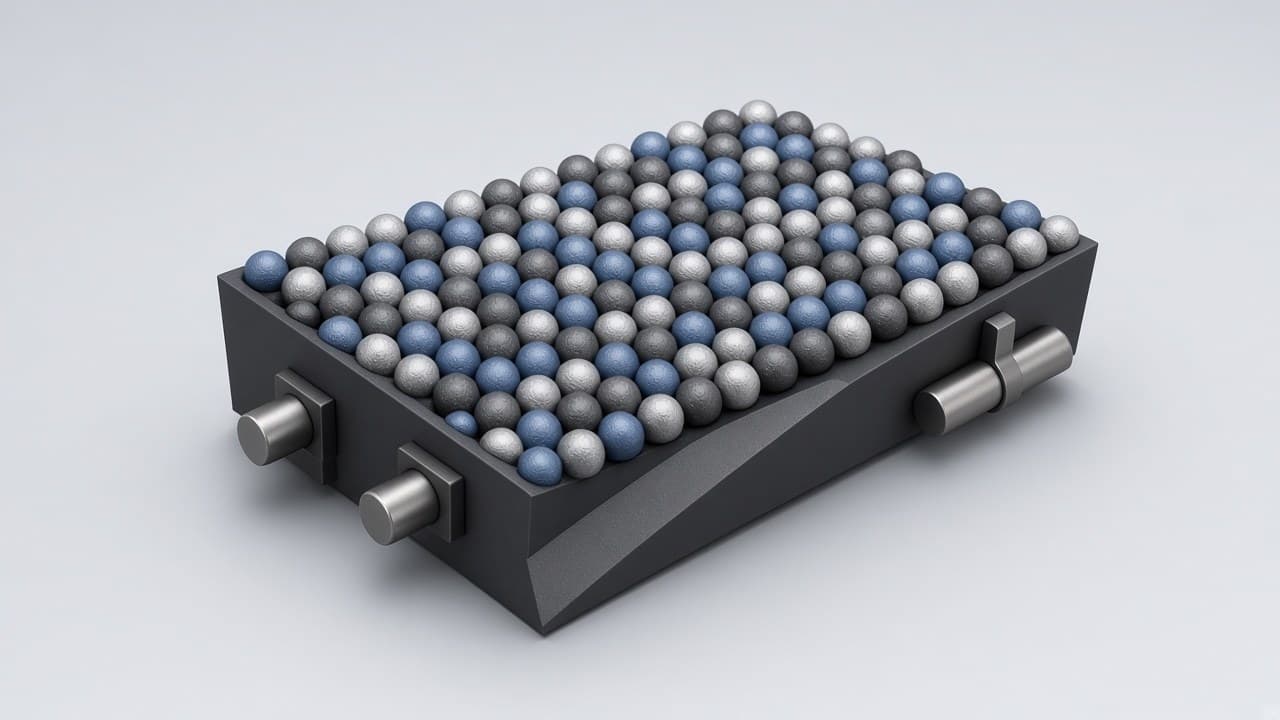
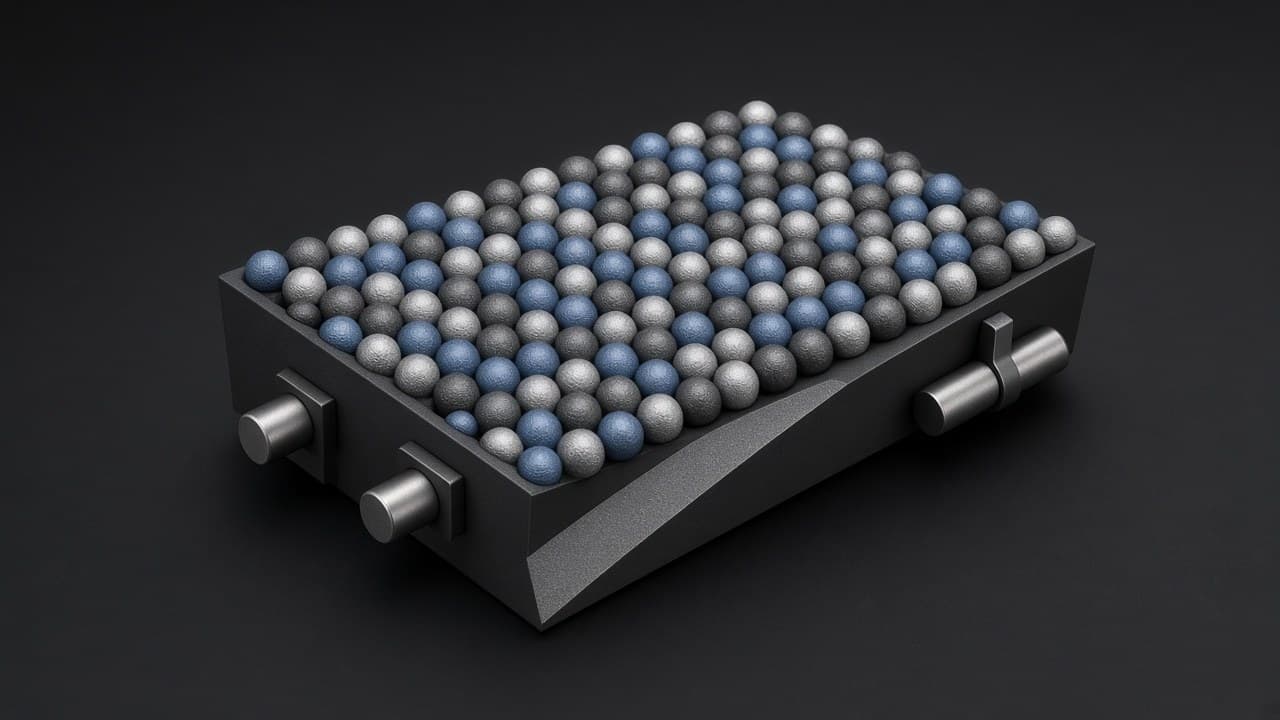
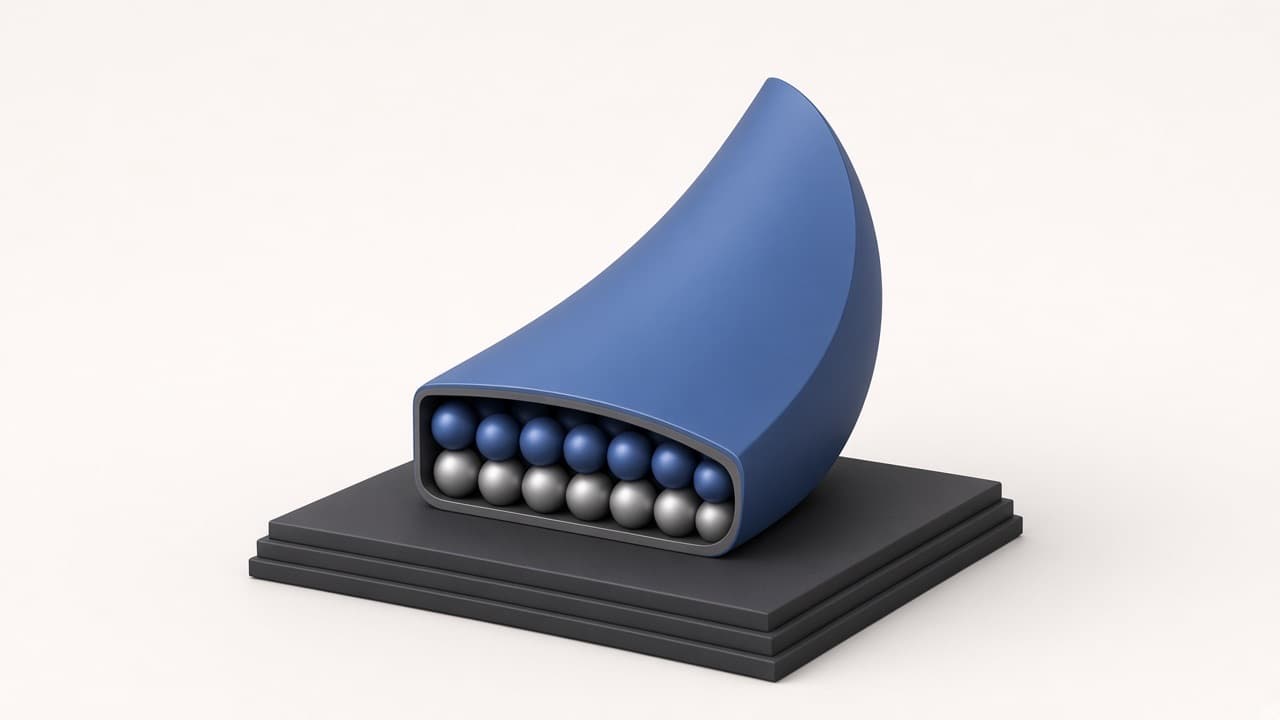
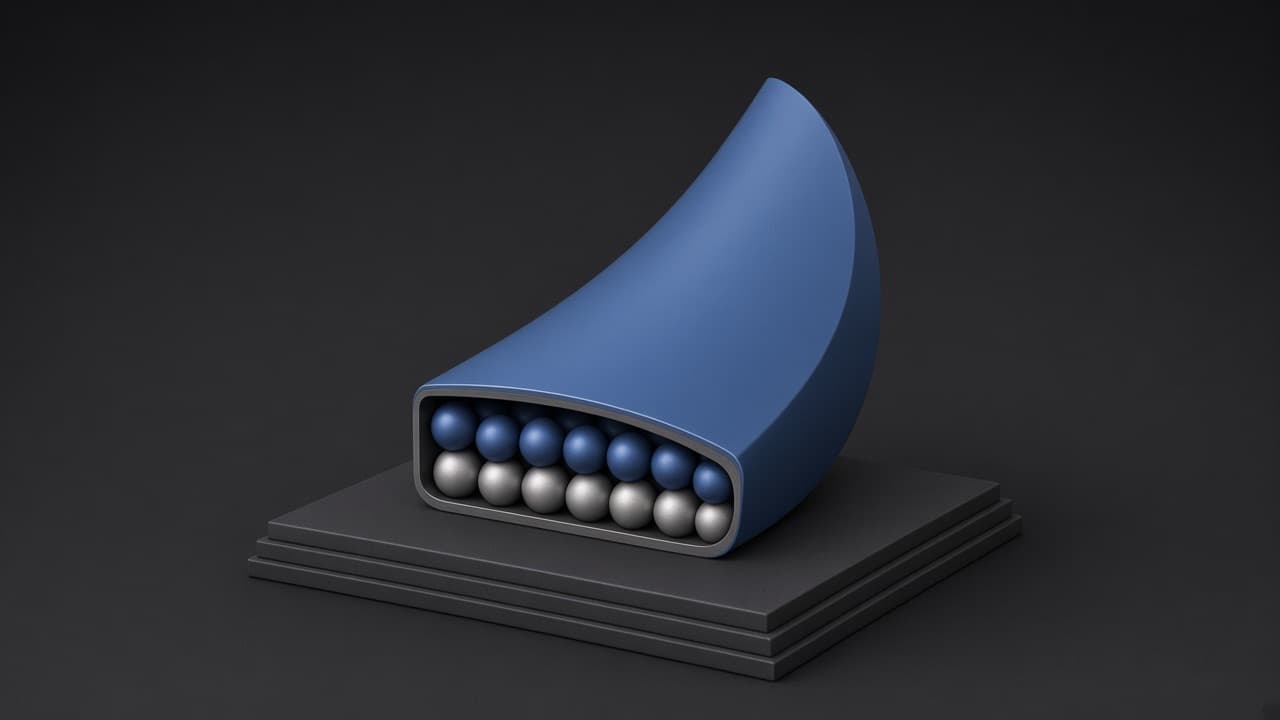
Coating history follows these mechanisms. Titanium nitride added hardness against abrasion. Adding aluminum gave (Ti,Al)N, which grows a thin, dense alumina layer at its surface when it gets hot, slowing oxidation and holding hardness at temperatures where the older coatings fail. (Cr,Al)N works on a similar principle and is valued where oxidation is the limit. The substrate matters too: most coated tools are cemented carbide, tungsten carbide held in a cobalt binder, so a coating has to match its expansion and adhere through every heating cycle.
Why dry, high-speed machining raises the bar
Coolant costs money to buy, maintain and dispose of, and in milling, coolant that reaches the edge only part of the time can add to thermal shock. Shops that cut dry, or with minimal lubrication, save on all of that. The price is paid at the cutting edge, which now runs hotter, with air at the hot zone and nothing carrying the heat away but the chip.
High speed adds more heat. At that point the coating has to do four things together: stay hard when it is hot, resist oxidation in air, act as a barrier to heat and diffusion between chip and substrate, and stay attached to a substrate that expands differently. It also has to be affordable to deposit on thousands of tools. No single property wins; the coating has to clear every limit at once.
One sentence in, the industry’s coatings out
That is the problem MS Lattice was handed, in one sentence and three numbers, with no starting structure and no family to begin from:
“A coating for dry, high-speed machining. Hardness 28 GPa. Survives 800 °C in air. Under $30 a kilo.”
Running in Open Discovery, MS Lattice came back with a ranked shortlist, every candidate scored against every target, with its record. In its top five: (Ti,Al)N and (Cr,Al)N, the coatings the industry runs on today. Proposals that broke the limits were turned away before a structure was built, so the compute went to candidates that could meet the job.
- Top 5(Ti,Al)N and (Cr,Al)N, the industry’s own coatings
- 1 sentencein, from need to ranked shortlist
- 0starting structures given
- 10.6%average hardness error across 20 reference crystals
For a tooling engineer, the value of the result is calibration. These coatings were not invented here; decades of development made them the incumbents. What the run shows is that, from the job alone, the search arrived where the industry arrived, which gives you reason to read the rest of a shortlist seriously when you brief it for the job your incumbent does not do well. Every estimate also arrives with its uncertainty attached, so you can see how far to trust a hardness figure before you spend a deposition run on it.
What a campaign can aim for
In the hard-coatings domain, a campaign sets targets on hardness, mechanical stability, oxidation resistance, thermal-expansion match and cost and supply risk. You specify the hardness, the working temperature, the substrate and the price per kilo. It searches three groups: nitrides and carbides, the workhorses of the cutting edge; diborides, among the hardest ceramics known; and MAX phases, layered carbides and nitrides that are hard and forgiving at once. Three presets start the work:
- Wear-resistant nitrides: coatings that outlast the tool.
- Cobalt-free carbide alternatives: the performance without the cobalt, for teams that want to reduce their exposure to the binder metal.
- Oxidation-resistant MAX phases: built for hot air.
Some jobs are less about hardness than about how a surface survives hot air for a long time. That is the oxidation-resistant-coatings domain, built around alloys that grow their own protective oxide. Its targets are the protective service ceiling, oxide stability, a protective scale, slow scale growth, the expansion match between scale and alloy, scale adherence and cost. Its groups are β-NiAl and γ′-Ni₃Al aluminides, MCrAlY bond coats, FeCrAl ferritic alloys and disilicides. In a tooling business it fits the furnaces and heating elements of heat treatment, where the Low-cost ferritic heater alloys preset looks for FeCrAl on a tight budget.
Targets can be requirements or preferences. A requirement, such as a hardness floor or a price ceiling, is held inside the search. A preference, such as more oxidation resistance, is pushed as far as it goes without breaking a requirement. If you already run a coating you like, Prototype-Guided Optimization starts from its structure and ranks every variant against it.
What you receive
A hard-coatings campaign returns ranked nitride, carbide, diboride and MAX-phase coatings, with estimated hardness, mechanical stability, oxidation resistance, expansion match and cost. An oxidation-resistant-coatings campaign returns ranked aluminide, MCrAlY, FeCrAl and disilicide alloys, with the oxide each is expected to grow, its estimated growth rate and service ceiling, expansion match, adherence and cost.
Each candidate carries the record of every check it passed, comes as a standard CIF structure file and is marked new or already known against the known crystals. First-principles verification is on call for the candidates you choose, including stability against every rival phase and elastic constants, which describe how the crystal carries load.
From shortlist to coated tool
A deposited film is not a bulk crystal. Its hardness depends on grain size, residual stress, texture and defects, all set by the deposition process and its parameters. Two coaters depositing the same composition can produce films that cut very differently. That is why the step from shortlist to tool belongs to the people who own the process: the coater, who knows what their chambers can deposit, and the user, who knows the workpiece and the cut.
- Read the shortlist against your processMark the candidates your coater can deposit with the sources and chambers they run, and the ones that need new ones.
- Check the doubtful onesSend candidates whose stability you want confirmed through first-principles verification before anyone orders material.
- Deposit on test piecesThe coater deposits on carbide coupons and measures film hardness, adhesion and structure against the CIF on record.
- Expose to heatAnneal and oxidize coated coupons at the working temperature to see whether a protective scale forms and hardness holds.
- CutRun cutting trials on your workpiece material, at your speeds and feeds, against your incumbent coating.
- Go againTighten the brief with what the trials taught you, and run the next campaign from the candidates you kept.
If you want candidates made and tested rather than handed over as files, Norck runs MS Lattice, then synthesizes, validates and manufactures the winner, within the scope you choose: Discovery, Discovery + Validation, Discovery + Validation + Production, or end to end. The coating recipe on your tools and the cutting trials on your parts stay with your coater and your shop.
Questions teams ask
Did MS Lattice invent (Ti,Al)N or (Cr,Al)N?
No. They are established industrial coatings. The result shows that, handed only the job and three numbers with no starting structure, MS Lattice put both in its top five.
Does it predict tool life?
No. It estimates hardness, mechanical stability, oxidation resistance, expansion match and cost for the bulk compound. Coating hardness, adhesion and tool life depend on deposition and need cutting tests.
How far can we trust the hardness figure?
Every estimate comes with its uncertainty. Across 20 reference crystals, the average hardness error is 10.6%. A deposited film can still differ from the bulk compound, which is why films are measured.
Can we start from the coating we run today?
Yes. Prototype-Guided Optimization takes your structure and what to improve, searches around it and ranks every variant against the original.


MatterSpace’s first domain engine
MatterSpace built MS Lattice for the scientists and engineers who discover and design new materials, starting from the properties their product needs.