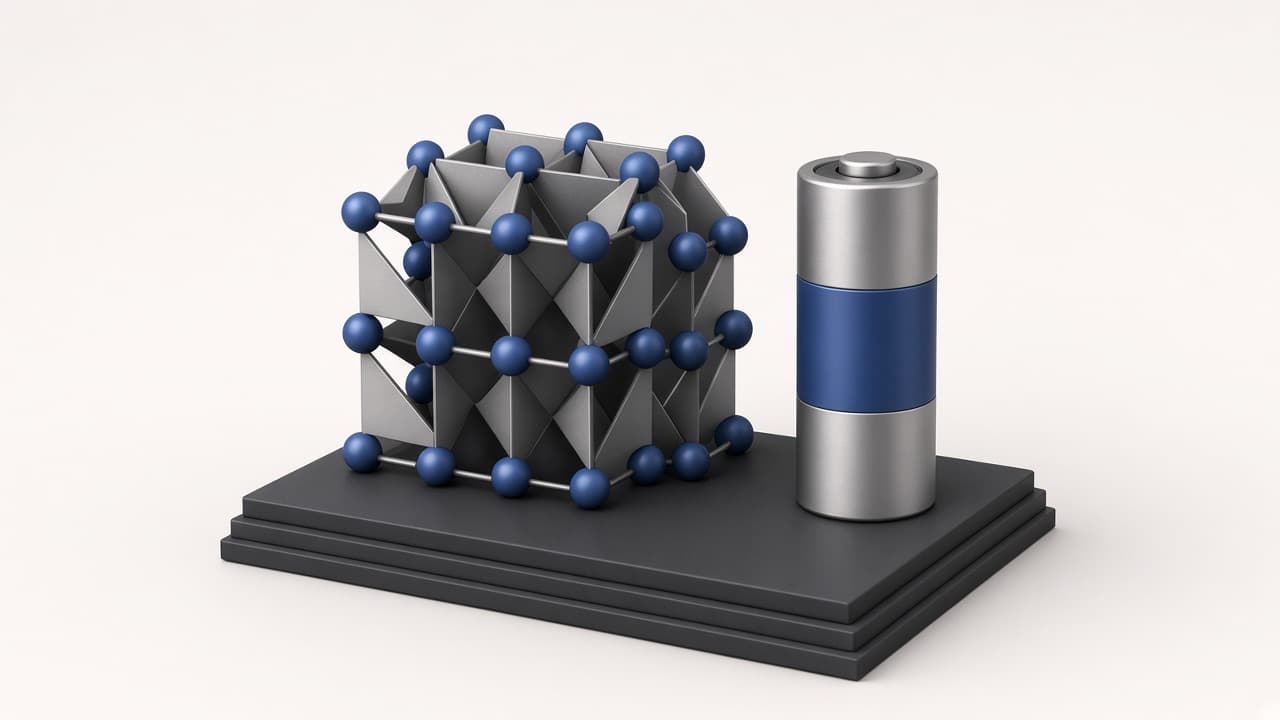
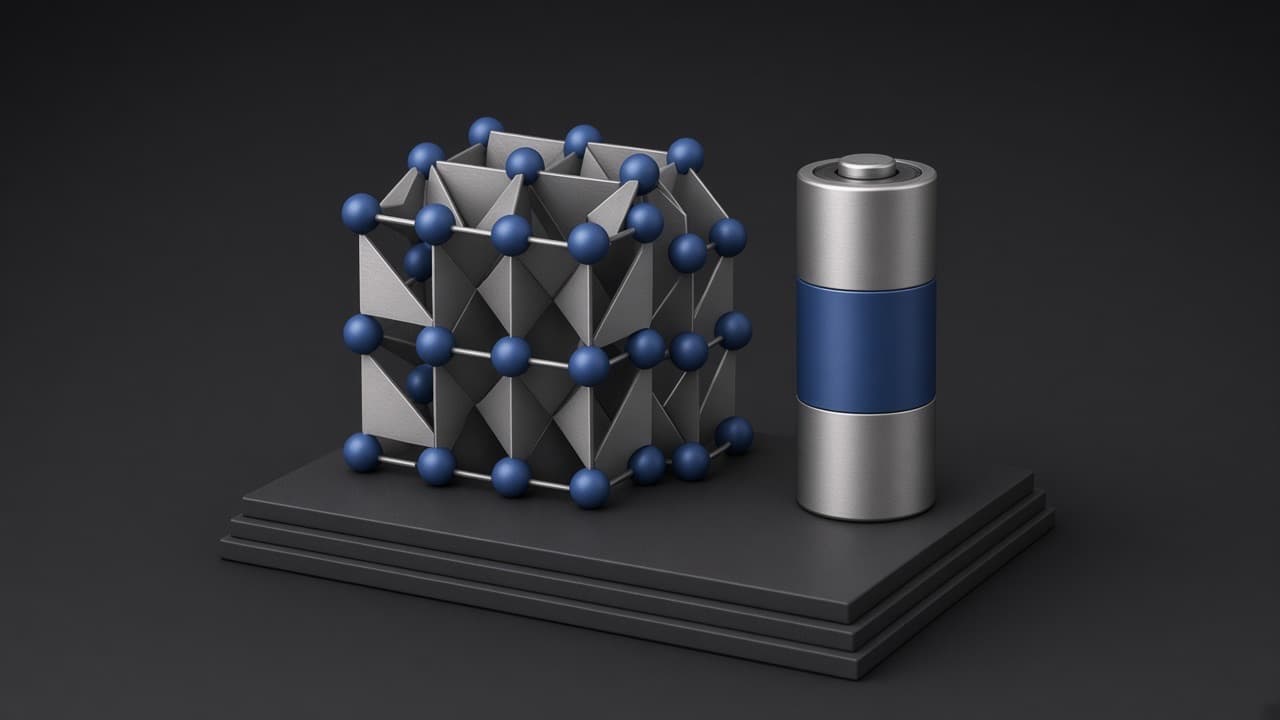
Most of what a battery cell can do is decided by a handful of crystals. The cathode sets how much energy each kilogram holds and a large share of what the cell costs. The electrolyte decides how fast ions move and how the cell behaves when something goes wrong. Improving either has meant years of making and testing compositions one at a time, because the space of possible substitutions is far larger than any lab can work through.
This post is for battery R&D leads and materials engineers. It covers what limits cells today, what an MS Lattice campaign in the battery-cathode and solid-electrolyte domains can aim for, how to brief it, what you receive, and what still has to be tested in a cell.
What limits cells today
Four pressures shape almost every cathode program, and they pull against each other.
- Energy. A cathode’s energy is bounded by its voltage and by how much lithium it can give up and take back without its structure breaking down. Layered oxides gain energy with more nickel and harder charging, but the further they are pushed, the more the lattice strains and the surface reacts.
- Cobalt. Cobalt helps a layered oxide hold together as lithium leaves it, which is why it has been hard to remove. It is also expensive and its supply is concentrated, so cell makers carry it as a cost and a supply risk.
- Fast charge. Ions have to move fast through the cathode crystal as well as the electrolyte and the anode. Structures with open, connected paths for lithium, such as spinels, take charge more readily.
- Safety. A charged layered oxide can release oxygen when it overheats, and a liquid electrolyte is flammable. Together they drive thermal runaway. A more stable cathode and a solid electrolyte both address it at the level of the material.
None of these moves alone. Removing cobalt tends to cost stability. Raising voltage tends to cost life. Polyanion cathodes such as lithium iron phosphate are stable, long-lived and free of cobalt, but store less energy per kilogram than nickel-rich layered oxides. Every cathode in production is a balance struck across five or six properties at once, and a search has to hold all of them in view together.
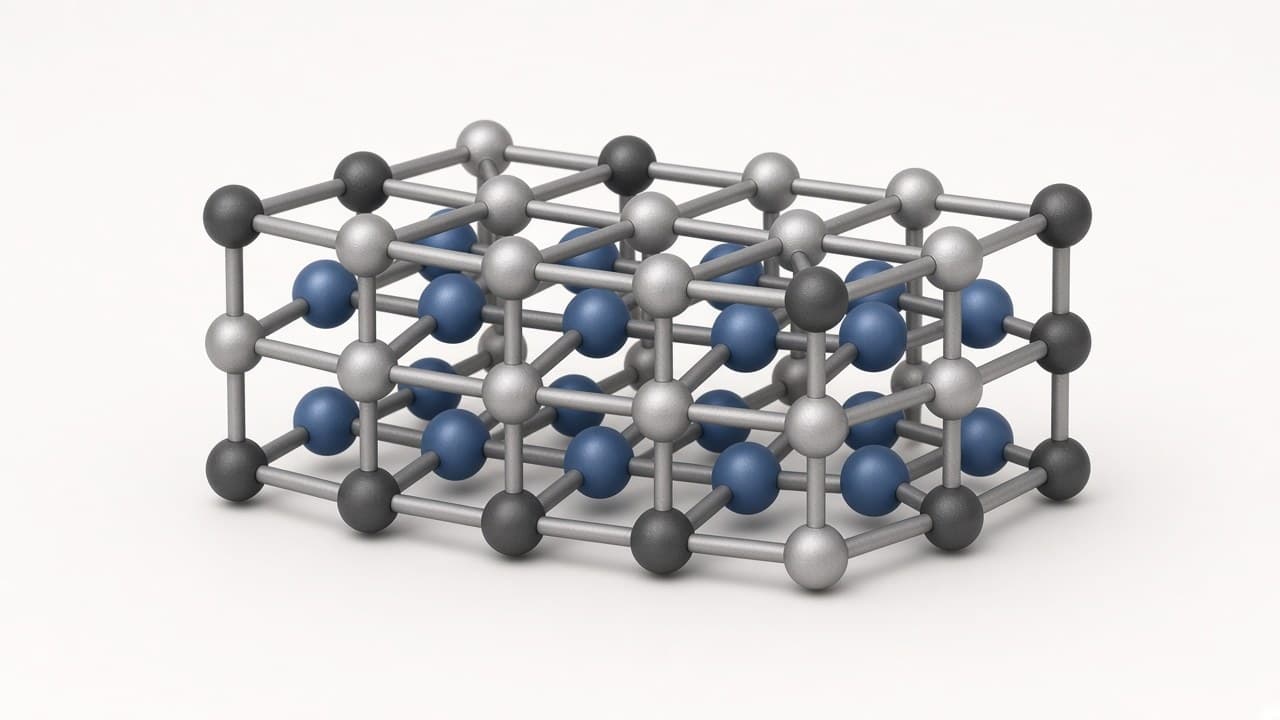
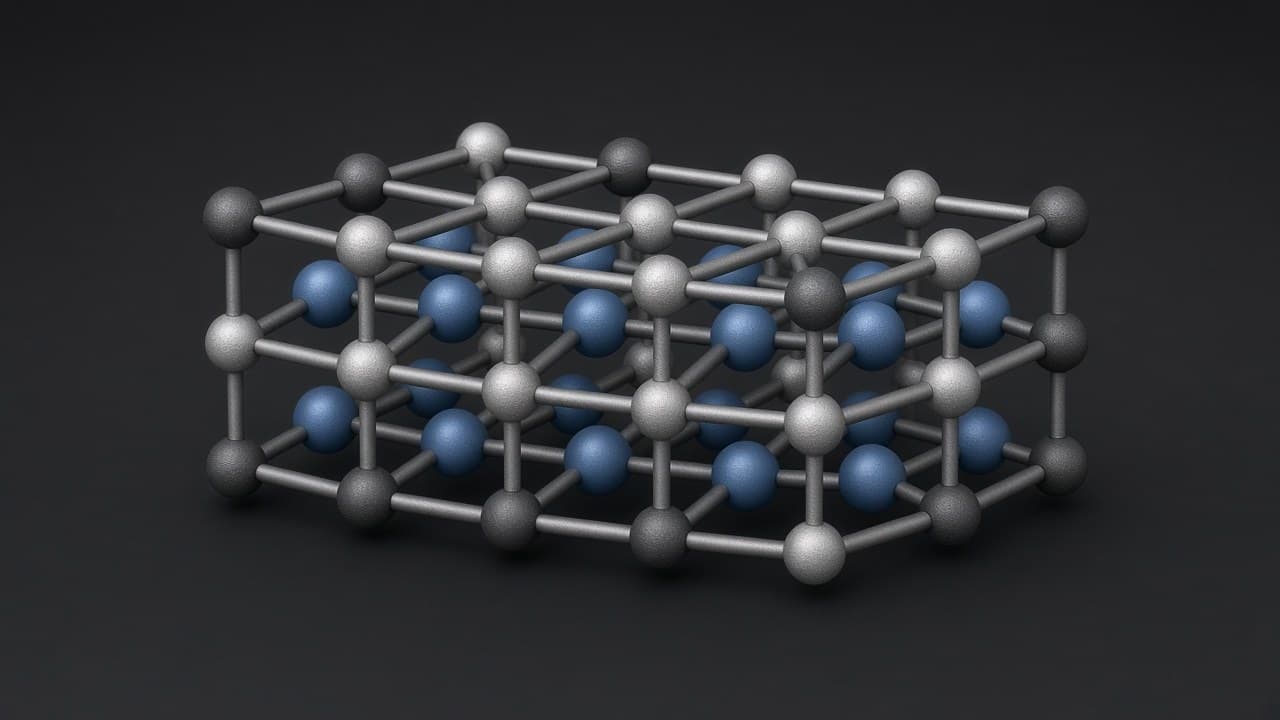
Solid electrolytes and the same cell
A solid electrolyte replaces the flammable liquid with a ceramic, or a ceramic–polymer blend, that conducts ions. Done well, it makes a cell harder to ignite and can open the way to a lithium-metal anode, which stores far more charge than graphite. The difficulty is that a solid has to do several things the liquid did without effort: conduct ions quickly at room temperature, stay stable across the whole voltage window, sit against the anode without reacting, and be made into thin, dense layers at a cost the cell can carry.
Each family of conductors solves part of that. Sulfides are the fastest ion conductors known, but they react with moisture and hold up over a narrower voltage range. Garnets are stable against almost everything, lithium metal included, but need high-temperature processing. Halides are stable at the highest voltages, which suits them to the cathode side of a cell. NASICON-type conductors offer open channels built for ions. The right choice depends on where the electrolyte sits and what it must touch.
That is why MS Lattice treats cathodes and solid electrolytes as two domains side by side. A solid-state cell needs both, and each shapes the other: a high-voltage cathode needs an electrolyte that does not break down against it.
What a campaign can aim for
In the battery-cathode domain, a campaign can set targets on voltage, capacity and energy density, rate capability, structural stability, and cost and cobalt content. It searches across seven groups, each with its own structures and chemistry:
- Layered NMC oxides, the balance of energy, life and cost
- Layered NCA oxides, for high energy
- Spinel oxides, for fast charging at lower cost
- Polyanion frameworks, for stability and long life
- Sodium-ion layered oxides, beyond lithium
- Prussian blue analogues, open frameworks for potassium
- Magnesium-ion spinels, two charges per ion
Four starting points come with the domain: Maximum energy, Long-range EV, for energy and cycle life in vehicles that go far on a charge, Fast charging, and Cobalt-free. Start from one, or set your own targets in your own units.
In the solid-electrolyte domain, the targets are ionic conductivity, the electrochemical stability window, stability against the anode, processability and cost. The groups are garnets, NASICON-type conductors, sulfides, halides, oxide-ion conductors, proton conductors and ceramic–polymer composites, for which the domain searches for the ceramic filler. Its presets are Maximum conductivity and Anode-compatible.
Every target can be a requirement or a preference. A requirement is held inside the search: a proposal that breaks it is turned away before a structure is built. A preference is pushed as far as it goes on top of the requirements, never at their expense. In battery work the hard limits, such as no cobalt or a cost ceiling, are rarely the properties you want more of.
Example briefs
A brief says what the material must do. For a cathode: the ion and cell chemistry, the voltage and capacity, how fast it must charge, and how much cobalt and cost you will accept. For a solid electrolyte: the mobile ion, the conductivity, the voltage window, the anode it sits against, and your limits on processing and cost. Four examples:
- A cobalt-free cathode for a long-range vehicle: lithium-ion, layered and polyanion families. Requirements: no cobalt, a floor on structural stability, a ceiling on cost. Preferences: as much energy density as those limits allow, then capacity.
- A fast-charging cathode for a lower-cost cell: lithium-ion, spinel and polyanion families first. Requirement: your cost ceiling. Preferences: rate capability first, then voltage.
- A sodium-ion cathode for stationary storage: sodium-ion layered oxides. Requirements on cost and structural stability, with capacity pushed as far as it goes.
- An electrolyte for a lithium-metal cell: lithium as the mobile ion. Requirements: stability against lithium metal and a window wide enough for your cathode. Preferences: the highest ionic conductivity the domain allows, then processability.
If you already have a cathode you trust, Prototype-Guided Optimization starts from its structure, searches around it and tracks every variant against the original. Open Discovery is for a target with no starting structure. Your own AI agent can run either over MCP, and every plan shows its price before it launches.
What you receive
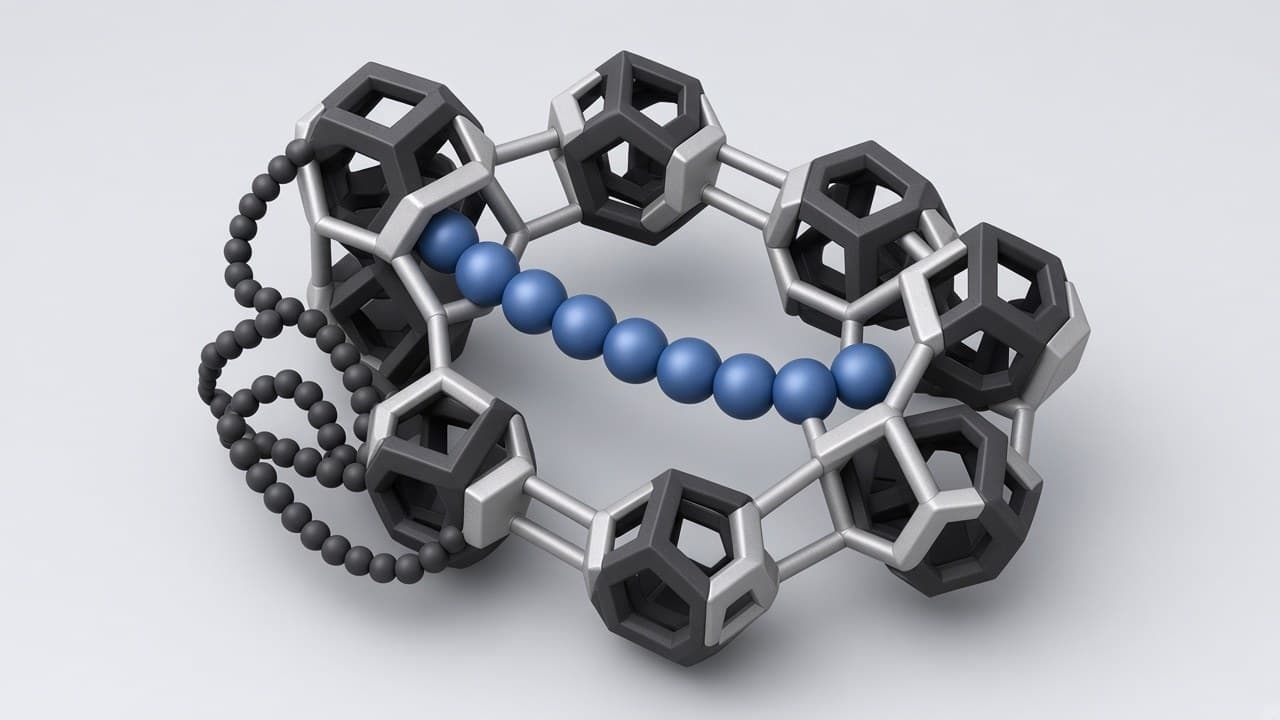
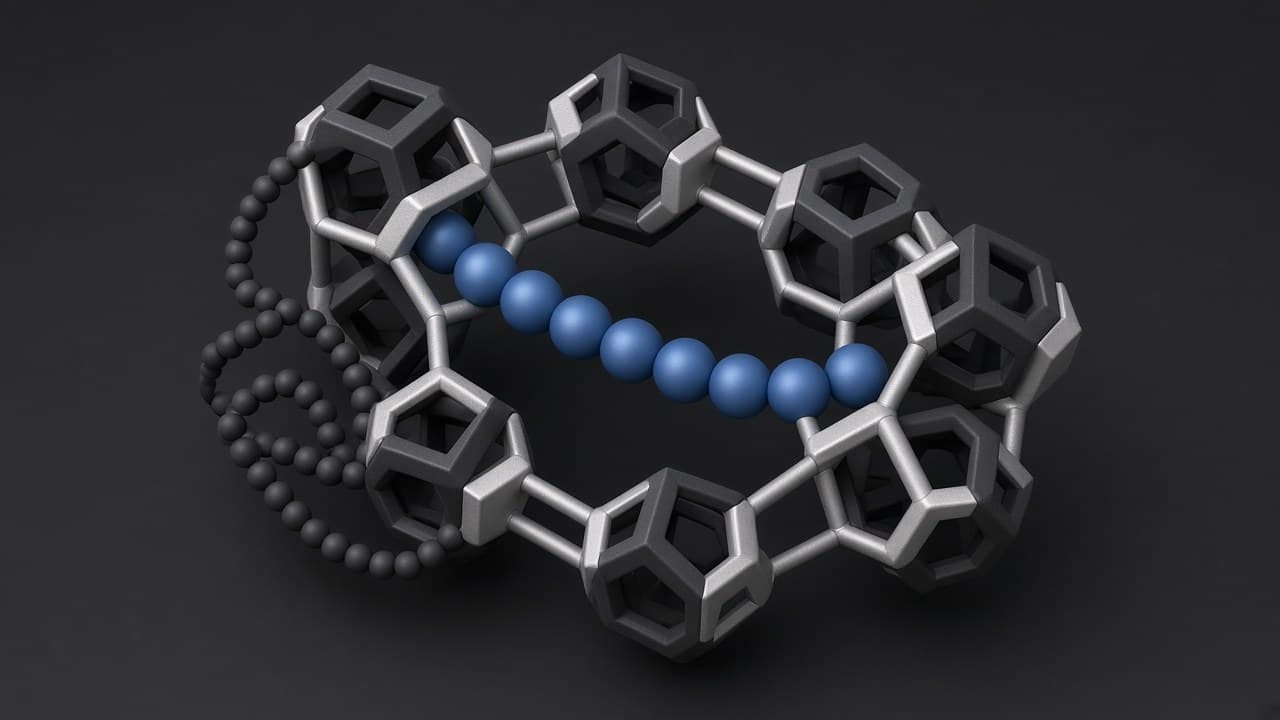
A cathode campaign returns a ranked shortlist of compositions and crystal structures across the layered, spinel, polyanion and open-framework families, with estimated voltage, capacity, energy density, rate capability, stability and cost. A solid-electrolyte campaign returns ranked garnet, NASICON, sulfide, halide, oxide-ion and proton-conducting candidates, with estimated ionic conductivity, stability window, stability against the anode, processability and cost.
Every candidate is scored against every target and carries its record: the checks it passed, from a valid structure to stability against the rival phases of its chemistry, with the uncertainty of each estimate. You see which candidates are new against the known crystals. Each comes as a CIF structure file, and first-principles verification is on call for the ones you choose.
The shortlist is short on purpose. A battery lab can make and cycle only so many compositions; it cannot make millions. The aim is to spend that capacity on the candidates most likely to be worth it.
What must still be tested in a cell
A bulk crystal is not an electrode. Particle size, surface coatings, how the electrode is mixed and pressed, and the electrolyte it meets all change what a cathode delivers, and the wear that ends a cell’s life shows up only over many cycles. In a solid electrolyte, grain boundaries can carry more resistance than the grains, and keeping contact with an electrode that swells and shrinks is engineering as much as chemistry. The path from shortlist to cell:
- Pick the first fewChoose from the ranked shortlist by the targets that matter most and by what your lab can make. Send the candidates you are least sure of through first-principles verification before they reach the furnace.
- Make the powderSynthesize each candidate and confirm by diffraction that the phase you made matches the structure file on its record.
- Measure in half cellsFor a cathode, measure voltage, capacity and rate in coin cells. For an electrolyte, measure conductivity on dense pellets and its stability against the electrodes it will meet.
- Build full cellsCycle the survivors in your format, with your electrolyte and your anode, and run the life and abuse tests your product demands.
- Go againKeep the winner, tighten the target and run the next campaign from what you learned.
If you would rather not run that path yourself, Norck takes it on as a service. Norck runs MS Lattice, then synthesizes, validates and manufactures the winner. You choose the scope: Discovery alone; Discovery + Validation, with candidates synthesized and physically tested; Discovery + Validation + Production, with a validated material produced; or end to end, to your finished parts. Battery technologies are among the fields MatterSpace builds for.
Questions teams ask
Does MS Lattice predict cycle life?
No. It estimates voltage, capacity, energy density, rate capability, structural stability and cost for the bulk crystal. Cycle life, safety, electrolyte compatibility and performance in your cell format have to be tested.
Can it improve the cathode we already use?
Yes. Prototype-Guided Optimization starts from your structure, searches around it and tracks every variant against the original, so you see what each change gains or costs.
Does it cover chemistries beyond lithium-ion?
Yes: sodium-ion layered oxides, Prussian blue analogues for potassium and magnesium-ion spinels. The solid-electrolyte domain also covers oxide-ion and proton conductors for fuel cells and electrolyzers, with the catalysis domain beside it.
What does a campaign cost?
Every plan shows its price before it launches, and every campaign runs inside the budget you set. On the record, compute has come to about a third of a cent per candidate.


MatterSpace’s first domain engine
MatterSpace built MS Lattice for the scientists and engineers who discover and design new materials, starting from the properties their product needs.