Every research team that relies on AI meets the same gap sooner or later. The model is capable, but it does not know what your team learned last week: the operating limit an expert confirmed, the setting that finally gave a clean result, the reference value that was replaced. The usual answer is to train it. Gather examples, fine-tune, validate the new version and deploy it.
That answer fits some problems well and others poorly. This post compares fine-tuning with the way MS Duplex learns, for the kind of knowledge a research team produces every day, and says where each one belongs.
What fine-tuning is good at, and where it strains
Fine-tuning changes a model’s weights through a training run on a prepared dataset. When it works, the change is broad. The model follows a house format, handles a specialist vocabulary more fluently or reasons about a family of problems with more skill, in every conversation, without being reminded.
That breadth is the reason to do it. If your team wants a model that behaves differently across the board, and the change will hold for a long time, a training run is a sensible investment. A fine-tuned model is also a model like any other: your team can connect it, evaluate it and govern it with the processes it already has.
The difficulty starts when the knowledge is narrow, new and still moving. That describes most of what a research team learns.
Where a training cycle meets research work
Research knowledge arrives one result at a time. A measurement comes back, a test passes, an expert rejects a recommendation and says why. Each of these is small, tied to its conditions and often superseded within the life of a project. Fitting that stream into training cycles creates friction at every step.
- Batching. One correction is too little to train on, so it waits until enough examples have collected to justify a run. Until then, the expert repeats it.
- Preparation. Someone has to turn results and corrections into a clean dataset, decide what goes in and check that no example contradicts another.
- Side effects. A new lesson trained into the weights can wear down what the model already knew, so every new version needs testing well beyond the change it was meant to make.
- Edits. If one lesson turns out to be wrong, there is no single place to fix it. Changing it means another training run.
- Traceability. Once a lesson is in the weights, it is hard to say which example taught the model a given behavior.
- Portability. The work belongs to one model. When a better model arrives, the team starts again.
None of this makes fine-tuning a bad tool. It makes it a coarse fit for knowledge that changes as fast as research does, where the newest result is often the one that matters most to the next decision.
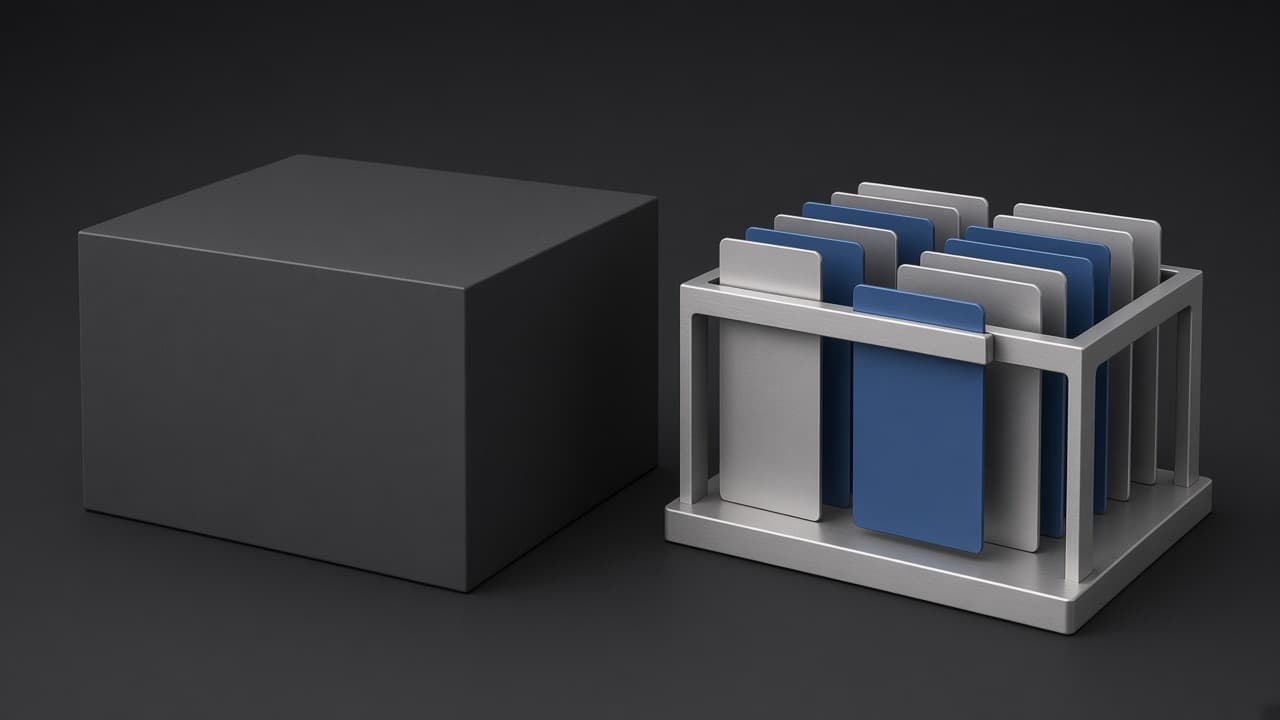
Learning from the next confirmed result
MS Duplex learns beside the model, with its weights left as they are. It plugs into the AI your team already uses, whether that is Claude, Codex, Cursor or another agent that speaks MCP, and into your own agents through its API and Python SDK. It learns from the outcomes and corrections your team chooses to capture. One confirmed result is enough. There is no dataset to assemble and no training run to schedule.
Say a team’s agent recommends settings for the next run of a recurring analysis. Here is how one correction travels.
- The agent recommendsIt proposes settings for the next run, using the model and tools the team already has.
- An expert corrects itA scientist or engineer rejects the recommendation because it ignores a limit of the method under the current conditions, and records the reason.
- The lesson is keptMS Duplex keeps the correction with its source and the conditions it holds under. Everything learned before it stays as it was.
- The next request uses itThe next time the agent recommends settings for a case under those conditions, it checks the limit first. Nobody retrains anything, and the expert does not have to repeat herself.
- Different conditions are flaggedWhen a case arrives under other conditions, MS Duplex says so instead of applying the lesson as if nothing had changed, and the team decides.
- Another model picks it upA colleague working with a different model meets a related case. The lesson and its source are already there, because they live beside the model rather than inside it.
A confirmed success follows the same path. When a result the agent predicted is confirmed by measurement, the approach behind it becomes the agent’s first choice for cases with the same conditions. When a newer confirmed value replaces an older one, the newer one applies and the history of the change is kept.
Two things are different from a training cycle. The lesson is ready from the next request, with nothing to batch or wait for. And a new lesson is added beside what MS Duplex already holds, so the agent that learned this week’s correction still knows the conditions your team confirmed months ago.
Changing your mind, one lesson at a time
Research revises itself. A measurement turns out to have come from a faulty setup. An expert’s correction held under narrower conditions than anyone recorded. A team needs to undo a lesson as easily as it added one.
In MS Duplex every lesson keeps its source and stands on its own. Correct a lesson and only that lesson changes. Remove it and the recommendations that depended on it go with it, while everything else stays. A removed lesson can be restored if the team decides it was right after all.
That changes the question a research lead has to answer. With a training cycle, the question is whether a whole new model version is safe to deploy. With MS Duplex, the team reviews individual lessons: what was learned, from which result, under which conditions and since when. A reviewer can see what a recommendation relies on, and another researcher can rebuild a decision from the record and check it.
What the controlled tests showed
MatterSpace compared MS Duplex with a model fine-tuned for the task, on recurring work, in controlled tests. MS Duplex ran with no training run at all.
- +16 ptsmore accurate than a model fine-tuned for the task, on recurring work, with no training run
- −89%fewer model calls than the fine-tuned model on that same work
Both figures come from MatterSpace’s controlled tests. The second fits what MS Duplex does with routine decisions. Where a method the team confirmed clearly applies, it settles the decision directly, often with no model call. Where the evidence is thin or the case is unfamiliar, it hands the decision to the model or flags it for a researcher, with the reason. Recurring work is where most decisions repeat, so that is where the savings in model calls show up.
Using both
Most teams will end up using both. MS Duplex works beside a fine-tuned model as well as a general one, and makes either of them learn from your work. A practical split looks like this:
- Use fine-tuning when you want to change what a model knows or how it behaves across the board, and the change will hold for a long time.
- Use MS Duplex for what your team confirms as the work goes on: results, corrections, decisions and methods that hold under particular conditions and may change.
- Keep the two apart in your records. A fine-tuned model is a model version. A lesson in MS Duplex is an item with a source, which your team can review, correct or remove.
- When a new model arrives, fine-tuned or general, connect it. The experience your team built in MS Duplex comes along.
For a research leader, the useful question is where each kind of knowledge should live. Broad, stable behavior belongs in the model. The knowledge your team produces every day belongs somewhere it can be learned from the next request, traced to its source and changed one lesson at a time.
Common questions
Does MS Duplex change my model’s weights?
No. It learns beside the model, with its weights left as they are. That is why a lesson is ready from the next request, why one lesson can be corrected on its own and why the experience stays when you change models.
Can we use MS Duplex with a model we have already fine-tuned?
Yes. MS Duplex works beside a fine-tuned model as well as a general one, and makes either of them learn from the results and corrections your team confirms.
Will new lessons wear down what it learned before?
A new lesson is added beside what MS Duplex already holds and leaves the rest as it was. Where a newer confirmed result replaces an older one, the newer one applies and the history is kept.
How do we know it will do better than fine-tuning on our work?
The figures here come from MatterSpace’s controlled tests. A pilot measures what MS Duplex does on your own recurring workflows, side by side with your current setup, judged blind by your experts.


Built by MatterSpace
MatterSpace builds MS Duplex for scientists, researchers and engineers in every field, so the AI they already use learns from every result they confirm.