

MS DuplexDecisions that know their limitsShow allShow less
Decisions that know their limits.
Settles what the evidence supports, and hands off the rest.
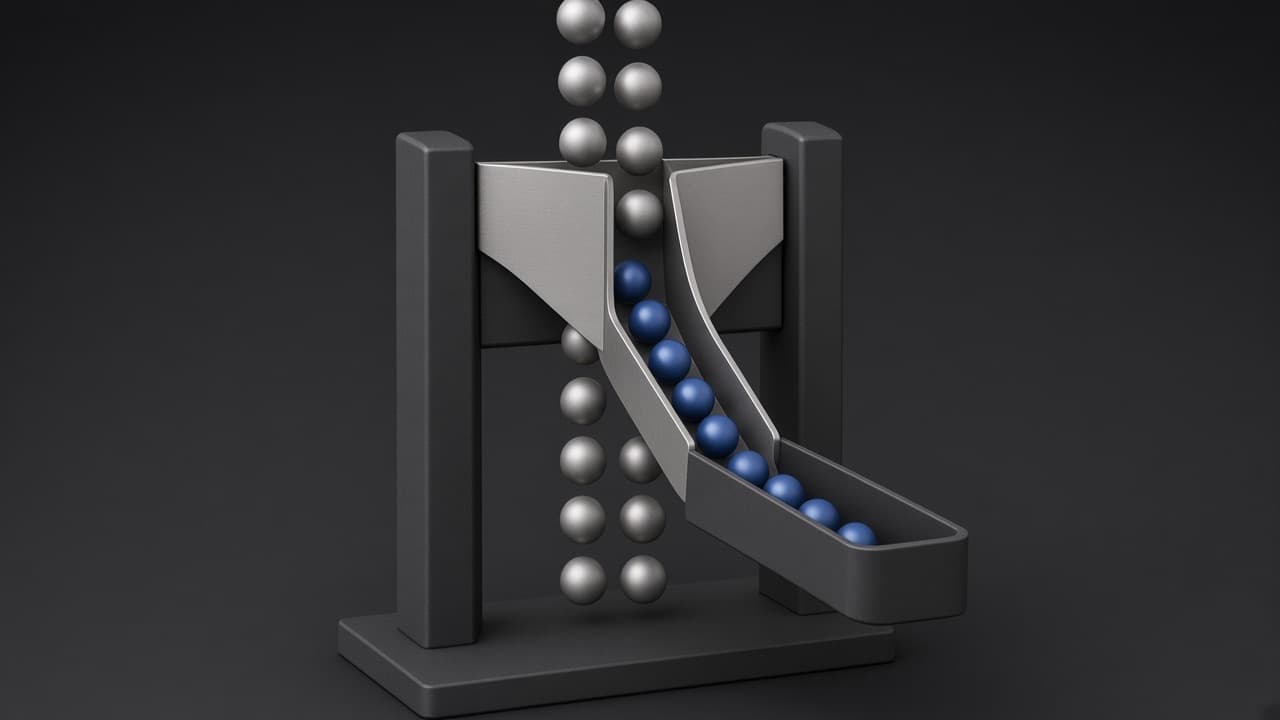
MS Duplex makes repeated decisions directly where a learned method clearly applies, often with no model call at all. Where the evidence is thin or the case is new, it hands the decision to your model or flags it for a researcher, with the reason.
Plan and decide · one of the fourteen capabilities of MS Duplex

Your team gets
- Routine decisions made fast and consistently
- Hard calls routed to the right person
- Lower model costs on recurring work
What decisions that know their limits mean for your team.
Decisions that know their limits come from an AI that can tell a case your team has settled before from a case it has not. Where a method your team confirmed clearly applies, MS Duplex makes the decision directly and consistently, often with no model call at all.
Where the evidence is thin, or the case is unlike anything your team has confirmed, MS Duplex hands the decision on. It goes to your model when the case needs reasoning, or to a researcher when it needs expert judgment, and the reason goes with it.
Every decision shows which path it took and why: the method it rested on and the evidence behind that method, or what was missing when it was handed on. Your team can see which decisions were routine, which were passed along and who settled each one.
Why research needs decisions that know their limits.
An agent that answers every question with the same confidence is hard to trust. The cases that matter most are often the ones it has never seen.
Most decisions in a research workflow repeat: which setting to use for a familiar analysis, which candidate passes a known screen, which method fits a standard case. Sending each of them back through a model costs calls, time and money, and the answers can drift from one run to the next even when the case has stayed the same.
The rare cases need the opposite treatment. A case outside anything your team has confirmed needs a model’s reasoning or a researcher’s judgment, and an agent that treats it as routine can send a costly run in the wrong direction. Research needs AI that knows the difference and says so.
Consistency matters
The same case, under the same conditions, should get the same decision every time it comes up.
Model calls add up
Recurring work sent through a model again and again costs more with every run.
Expert time is scarce
Researchers should spend their time on the calls that need them, and see why each one was sent to them.
New cases are costly
A new case treated as routine can spend compute and lab time on a run that was never going to work.


How decisions work in your team’s day.
Your agent asks for a decision the way it does today. MS Duplex looks at what your team has confirmed and sends the decision down the right path.
- 1
A decision comes up
Your agent needs to choose a setting, rank a candidate, pick a method or approve the next step.
- 2
The evidence is checked
MS Duplex looks at what your team has confirmed for cases like this one, and whether the conditions match.
- 3
Routine cases are settled
Where a learned method clearly applies, MS Duplex makes the decision directly, often with no model call, and records the method it used.
- 4
The rest are handed on
Where the evidence is thin or the case is new, the decision goes to your model or is flagged for a researcher, with the reason.
An example, in any field where an agent ranks and decides.
A team’s agent screens a steady stream of candidates for a recurring evaluation. Over one week, MS Duplex settles the familiar cases and sends the unusual ones where they belong.
- 1
Familiar cases
On Monday most of the day’s candidates match a screening method the team confirmed earlier. MS Duplex ranks them directly, with no model call, and each ranking points to the method behind it.
- 2
A thin case
On Tuesday a candidate sits at the edge of what the team has confirmed. MS Duplex passes it to the model with a note on which evidence is missing, and the model reasons it through.
- 3
A new case
On Wednesday a candidate arrives unlike anything the team has seen. MS Duplex flags it for a researcher, who decides and records why, and the decision is kept with its reason.
- 4
The next time
On Friday a candidate like Wednesday’s arrives under the same conditions. The researcher’s confirmed decision now applies, so MS Duplex settles it directly and the expert is spared the same question.
Decisions that know their limits work with the rest of the layer.
What MS Duplex can decide rests on what the other capabilities learn and keep.
Reusable methods
Every verified method widens the set of cases MS Duplex can settle directly, with the method on record.
Continual learning
A researcher’s decision on a handed-on case is learned at once, so the next case like it can be settled without asking again.
Rules and approvals
Your rules come before any decision, and the steps you select still wait for a person, however routine they look.
Provenance, review and unlearning
Every decision keeps the method and evidence it rested on, so another researcher can rebuild it from the record.
What your team gets.
Routine decisions made fast and consistently, hard calls in the right hands, and lower model costs on recurring work.
- fewer model calls than a model fine-tuned for the task, on recurring work, in MatterSpace’s controlled tests
- −89%
Routine decisions made fast
Where a learned method clearly applies, the decision is made directly, often with no model call.
Consistent answers
The same case under the same conditions gets the same decision, with the same method behind it.
Hard calls routed to the right place
Cases with thin evidence go to your model, and cases unlike anything seen before are flagged for a researcher.
A reason with every hand-off
Every decision that is passed along says why, so the model or person who takes it knows what is missing.
Lower model costs
Recurring work needs far fewer model calls, so model spend goes to the cases that need reasoning.
Decisions on record
Each decision shows the method and evidence it rested on, or the reason it was handed on.
Common questions.
Make the next run benefit from the last.
Bring us the research your AI should get better at. We will plan a pilot on your own workflows, with your experts as the judges.