

MOF sorbents.
Frameworks that capture and separate gas.
A MOF sorbents campaign finds metal-organic frameworks, porous crystals of metal nodes and organic linkers, that capture or separate the gas you name.
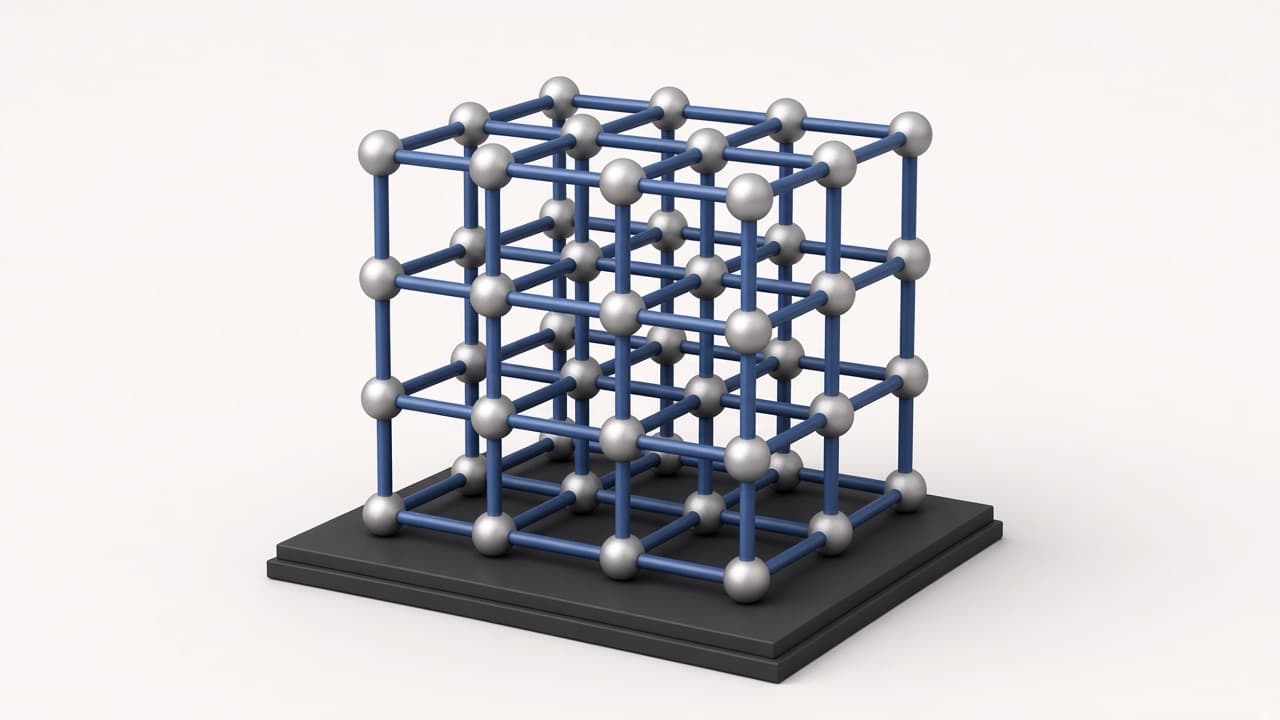
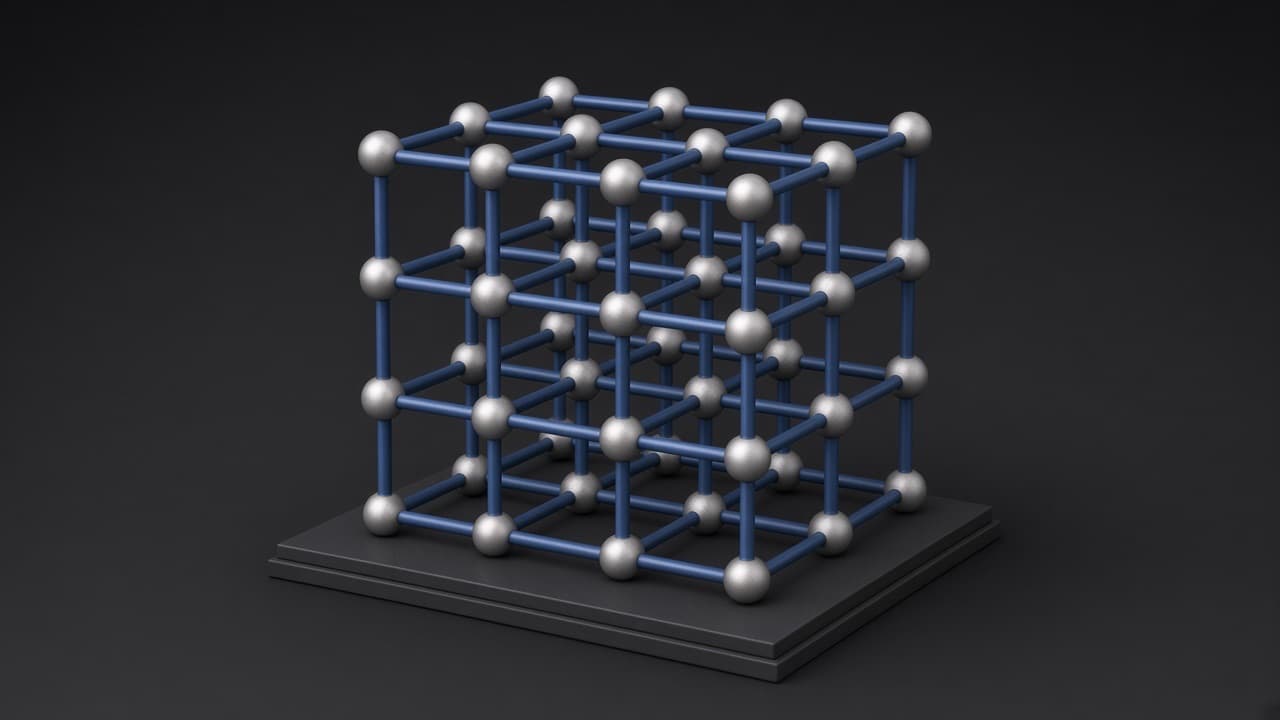
- Carbon capture
- Hydrogen storage at 77 K
- Gas-separation membranes
Why this domain matters to your work.
Metal-organic frameworks are crystals built from metal nodes and organic linkers, with pores so open that their internal surface is very large for their weight, which makes them strong candidates for capturing and separating gas. Teams look to them for carbon capture from flue gas and air, for hydrogen storage in a tank at 77 K, and for membranes that sieve one gas from another. The IRMOF series sets the reference for surface area, UiO frameworks stand up to water, and ZIFs separate gases by the size of their windows.
The frameworks with the most surface and the highest uptake per gram are often the least robust, and many lose their structure in humid feeds such as flue gas. Uptake per gram and uptake per volume can point to different frameworks, which matters for a tank or a packed bed. Water-stable zirconium and hafnium frameworks cost more to make, linkers can be expensive at scale, and the distance from a promising powder to a working process is wide: selectivity, working capacity and long-term cycling decide it.
A campaign lets your team name the gas and the conditions, such as CO₂ near room temperature or hydrogen at 77 K, how humid the feed is, and cost. You receive ranked IRMOF, UiO and ZIF frameworks with their structures, each with its computed density, porosity, geometric surface area and pore sizes, and its estimated CO₂ and H₂ uptake, water stability and cost. Uptake figures are screening estimates, not measured isotherms. Selectivity, working capacity, diffusion, flexibility and defects are decided in the lab, on the framework your team makes.
The material families this domain searches.
Each family brings its own structures and chemistry to the search. A campaign can search one of them or compare several under the same targets.
IRMOF series
MOF-5 and its relatives, frameworks with very large internal surface, chosen for dry feeds such as hydrogen held in a cold tank.
UiO series
Zirconium and hafnium frameworks that stand up to water, chosen for humid feeds such as flue gas and air in carbon capture.
Zeolitic imidazolate frameworks
ZIF-8 and its relatives, frameworks with small windows that sieve gases by size, chosen for membranes that separate one gas from another.
The properties a campaign can aim for.
Choose the properties that matter to your work. For each one, say whether a candidate must meet it or should push it as far as it goes, with cost and supply always in view.
- CO₂ uptake, H₂ uptake or surface area
- CO₂ uptake per volume
- Porosity
- Water stability
- Cost and supply risk
Starting points for a campaign.
Each starting point sets up a campaign for a common goal in this domain. Begin from one and adjust its targets, or set your own from the start.
Carbon-capture sorbents
Suits carbon-capture teams, searching for water-stable frameworks that take up CO₂ from humid flue gas and air.
Cryogenic hydrogen storage
Suits hydrogen tank developers, ranking high-surface IRMOFs on estimated hydrogen uptake for a 77 K tank.
Kinetic CO₂/CH₄ sieving
Suits teams upgrading biogas or natural gas, searching for ZIF windows that let CO₂ through and hold methane back.
Water-stable sorbents
Suits any process with a humid feed, putting water stability first so the framework keeps its structure in use.
Low-cost sorbents
Suits capture and separation at bulk scale, searching for sorbents that keep cost and supply risk within a tight budget.
What you specify, what you receive and where the figures stop.
MS Lattice hands your lab a shortlist to make and test. Its figures are screening estimates and calculations, not measurements of the new material, and each domain says where they stop.
You specify
The gas and the conditions, such as CO₂ near room temperature or hydrogen at 77 K, how humid the feed is, and cost.
You receive
Ranked IRMOF, UiO and ZIF frameworks with their structures, each with its computed density, porosity, geometric surface area and pore sizes, its estimated CO₂ and H₂ uptake, water stability and cost.
Before you rely on it
Uptake figures are screening estimates, not measured isotherms, and the surface area is geometric, not a BET measurement. Selectivity, working capacity, diffusion, flexibility and defects are not computed; MOF-74, HKUST-1, the MIL series and interpenetrated frameworks are not covered.
The same four modes work in every domain.
Search from your targets alone, improve a material your team already uses, or watch the engine reach known materials, with the targets as guides or sealed away, to see how well it searches.
Open Discovery
Choose it when you know what the material must do but have no starting structure.
Prototype-Guided Optimization
Choose it when you already have a good material and want to make it better.
Guided Rediscovery
Choose it when you want to watch the engine reach a material you already know.
Blind Rediscovery Benchmark
Choose it when you want to test whether the engine finds an answer it was never shown.
Every candidate arrives with its record.
Each candidate comes ranked against your targets, with its estimated properties and their uncertainty, the checks it passed and a structure file to export, ready for your lab.
Questions teams ask about this domain.
Have a materials target? Tell us what it must do.
Share the material domain, the properties you need and the limits the material must respect. We will show you how MS Lattice would approach it through Norck, from a ranked shortlist for your own lab all the way to finished parts.