

Structural alloys.
Stiffness per kilogram, in a stable solution.
A structural alloys campaign helps your team find lighter, stiffer or cheaper solid-solution alloys of aluminum, magnesium, titanium and the refractory metals.
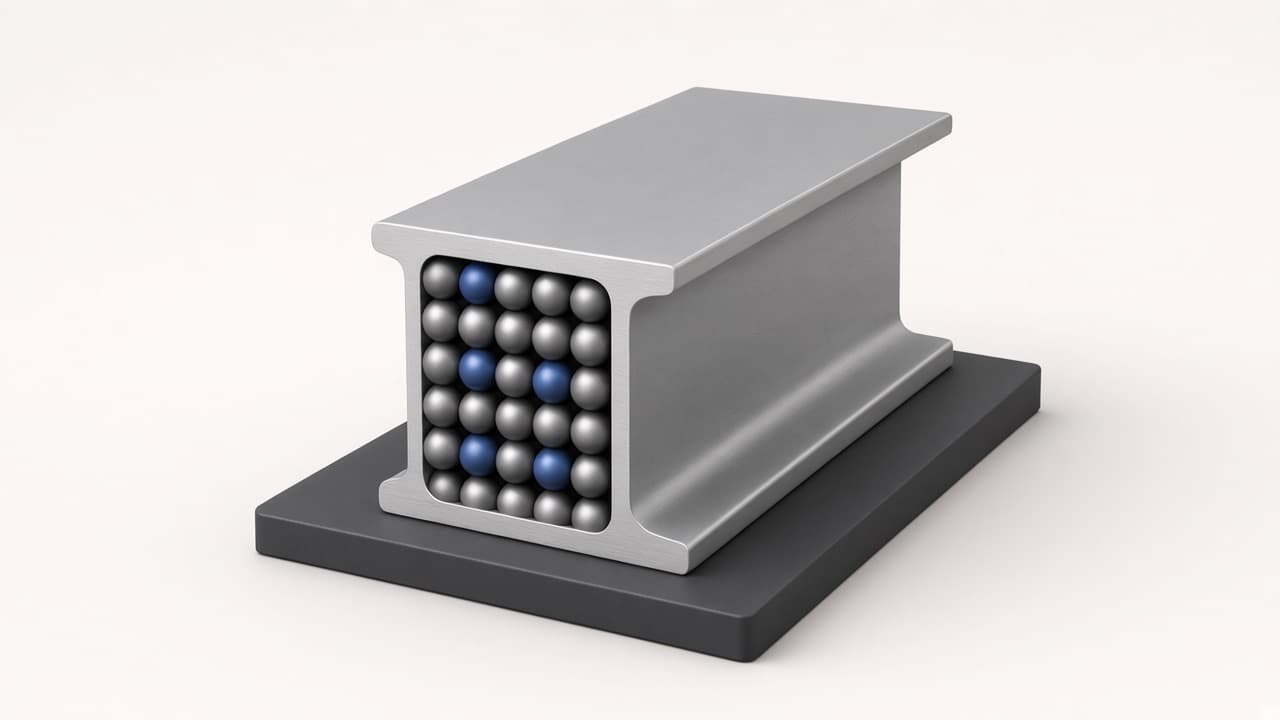
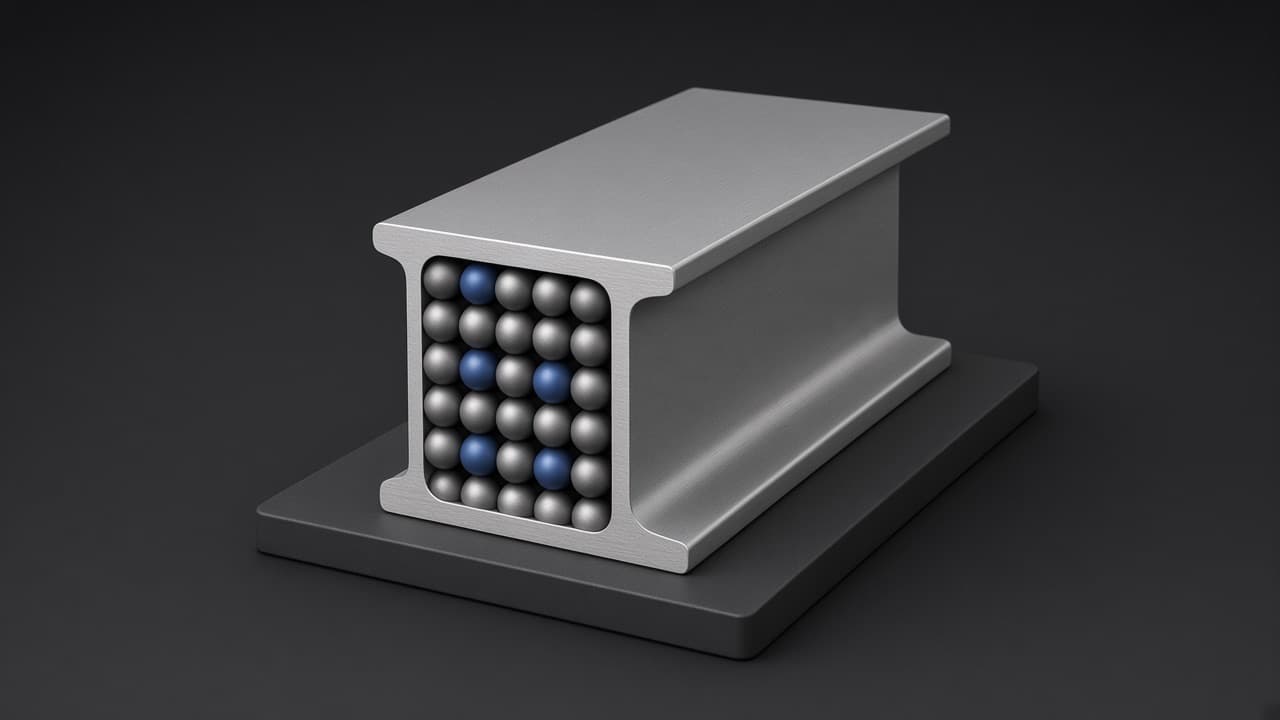
- Airframes and car bodies
- Aerospace titanium
- Forgings and springs
- Furnace and rocket-engine hardware
Why this domain matters to your work.
Structural alloys carry the load in almost everything that moves or flies, and the stiffness they give per kilogram sets how light a structure can be. Aluminium and magnesium form airframe skins, car bodies and housings, titanium carries aerospace frames, forgings and springs, and dilute refractory alloys of tungsten, molybdenum, niobium and tantalum hold their shape in furnace hardware and rocket-engine parts. A small gain in specific stiffness, or a cheaper composition with the same performance, can carry through an entire product line.
Most gains come at a price elsewhere. Adding the elements that raise stiffness or lower density can push an alloy out of a stable solid solution and into brittle phases, and the lightest metals bring their own limits: magnesium’s ductility and corrosion, titanium’s price, the weight and oxidation of the refractory metals. Supply matters as much as chemistry, since vanadium, niobium, tantalum and lithium all carry cost or sourcing risk, and a composition that cannot be bought in volume never reaches a part.
In a campaign, your team specifies the stiffness, density and cost it needs, the base-metal family and the elements it can source, and receives ranked aluminium, magnesium, titanium and refractory solid solutions, each with estimated stiffness and specific stiffness, density, phase stability, a ductility indication, an indicative melting point and cost. That narrows the melts worth making. Strength, fatigue, creep, toughness, corrosion, formability and weldability are not predicted, so every alloy on the list still needs mechanical testing for its part.
The material families this domain searches.
Each family brings its own structures and chemistry to the search. A campaign can search one of them or compare several under the same targets.
Aluminium alloys
The wrought and casting aluminum families, screened as solid solutions, chosen for light, affordable structures such as airframe skins and car bodies.
Magnesium alloys
The lightest structural metal and its lithium alloys, chosen when every gram counts in housings, bodies and other lightweight parts.
α and near-α titanium
The aerospace workhorse titanium alloys, Ti–6Al–4V among them, chosen for light, stiff frames and parts that see moderate heat.
Metastable β titanium
Titanium alloys that keep their β phase at room temperature, chosen for forgings and springs that need lower stiffness and easier forming.
Dilute refractory alloys
Tungsten, molybdenum, niobium and tantalum with small additions, chosen for furnace and rocket-engine hardware that must hold its shape when hottest.
The properties a campaign can aim for.
Choose the properties that matter to your work. For each one, say whether a candidate must meet it or should push it as far as it goes, with cost and supply always in view.
- Specific stiffness
- Solid-solution stability
- Ductility, indicative
- Low density
- Melting point, indicative
- Cost and supply risk
Starting points for a campaign.
Each starting point sets up a campaign for a common goal in this domain. Begin from one and adjust its targets, or set your own from the start.
Lightweight stiffness
Suits automotive and airframe teams, ranking aluminum and magnesium alloys on stiffness per kilogram for skins, bodies and housings.
Aerospace titanium
Suits aerospace teams, searching for light, stiff titanium alloys that stay stable as solid solutions.
Metastable β titanium
Suits makers of forgings and springs, searching for titanium alloys that keep their β phase at room temperature.
Refractory structural alloys
Suits propulsion and furnace engineers, ranking dilute refractory alloys for nozzle liners and furnace hardware.
Low-cost structural alloys
Suits cost-driven programs, searching every family under a tight cost and supply budget.
What you specify, what you receive and where the figures stop.
MS Lattice hands your lab a shortlist to make and test. Its figures are screening estimates and calculations, not measurements of the new material, and each domain says where they stop.
You specify
The stiffness, density and cost you need, the base-metal family, and the elements you can source.
You receive
Ranked aluminium, magnesium, titanium and refractory solid solutions, with estimated stiffness and specific stiffness, density, phase stability, a ductility indication, an indicative melting point and cost.
Before you rely on it
Strength, ductility, fatigue, creep, toughness, corrosion, formability and weldability are not predicted, and the melting point and cost are indicative. Any alloy needs mechanical testing and sign-off for its part.
The same four modes work in every domain.
Search from your targets alone, improve a material your team already uses, or watch the engine reach known materials, with the targets as guides or sealed away, to see how well it searches.
Open Discovery
Choose it when you know what the material must do but have no starting structure.
Prototype-Guided Optimization
Choose it when you already have a good material and want to make it better.
Guided Rediscovery
Choose it when you want to watch the engine reach a material you already know.
Blind Rediscovery Benchmark
Choose it when you want to test whether the engine finds an answer it was never shown.
Every candidate arrives with its record.
Each candidate comes ranked against your targets, with its estimated properties and their uncertainty, the checks it passed and a structure file to export, ready for your lab.
Questions teams ask about this domain.
Have a materials target? Tell us what it must do.
Share the material domain, the properties you need and the limits the material must respect. We will show you how MS Lattice would approach it through Norck, from a ranked shortlist for your own lab all the way to finished parts.