

Oxidation-resistant coatings.
Alloys that grow their own shield.
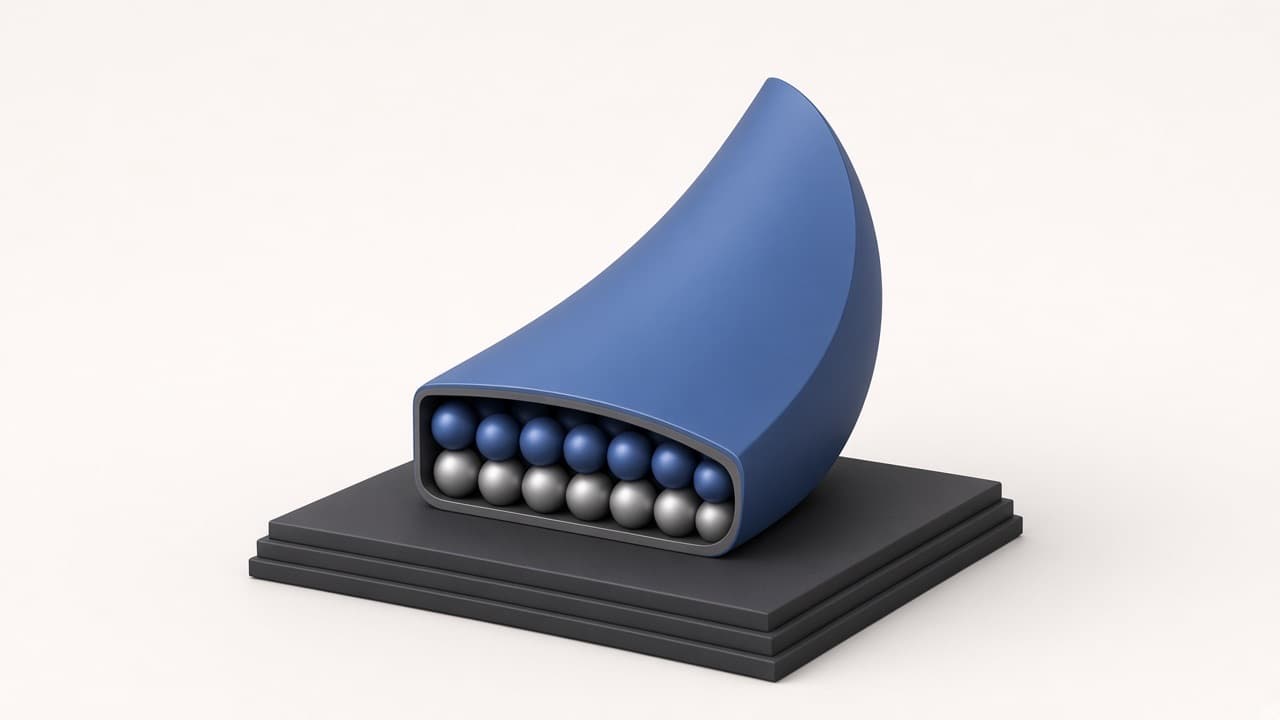
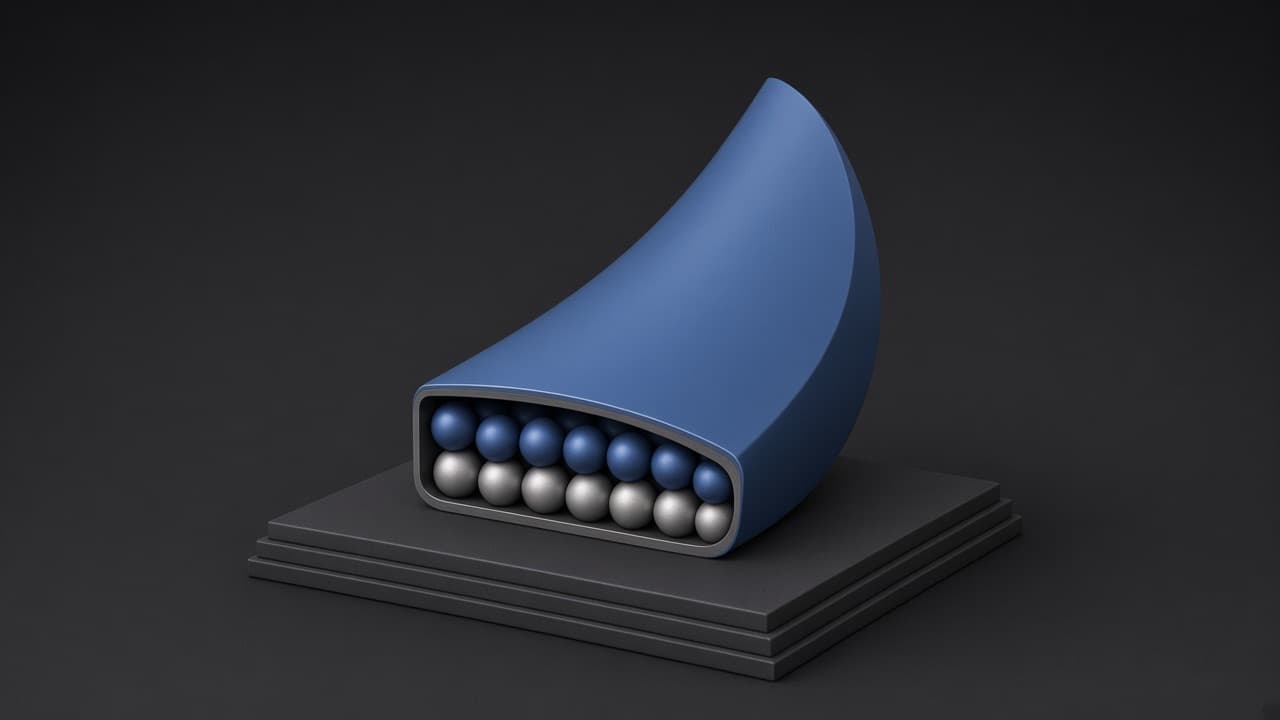
An oxidation-resistant coating campaign finds alloys that grow their own thin, protective oxide and keep a hot metal part in service longer.
- Bond coats under thermal barriers
- Turbine airfoils
- Heating elements
- Furnace hardware
Why this domain matters to your work.
An oxidation-resistant coating keeps a hot metal part in service by growing a thin, slow, adherent oxide between the alloy and the air. Aluminides and MCrAlY overlays do this as bond coats under thermal barriers and on turbine airfoils, FeCrAl alloys do it in heating elements and furnace hardware, and disilicides carry it to the highest temperatures as silica formers. In every case the coating’s life sets the part’s life: once the protective scale stops re-forming, the metal beneath it oxidizes quickly.
The targets pull against each other. An alloy rich enough in aluminum or silicon to keep re-forming its scale can turn brittle or interdiffuse with the substrate. A scale that grows slowly can still crack away if its expansion does not match the alloy’s, and adherence often rests on small additions that are hard to balance. Platinum-modified aluminides perform well but carry the cost and supply risk of platinum, while low-cost ferritic alloys give up temperature headroom to stay cheap.
A campaign lets your team state the service temperature, the protective oxide you want, the system the coating serves and the cost you will accept, with those limits held inside the search. You receive ranked aluminide, MCrAlY, FeCrAl and disilicide alloys, each with the oxide it is expected to grow, its estimated growth rate and service ceiling, expansion match, adherence and cost, and the record of every check. Oxidation is screened, not simulated: spallation in thermal cycling, interdiffusion, depletion, hot corrosion and water vapor are decided in furnace and cycling tests.
The material families this domain searches.
Each family brings its own structures and chemistry to the search. A campaign can search one of them or compare several under the same targets.
β-NiAl aluminides
The diffusion aluminide coating and its platinum-modified form, chosen for turbine parts that need a slow-growing, adherent alumina scale.
γ′-Ni₃Al aluminides
The strengthening phase of nickel superalloys applied as a coating, chosen for a close chemical match with the superalloy part beneath.
MCrAlY bond coats
Overlay coatings of nickel or cobalt with chromium, aluminum and yttrium, chosen as the bond coat that holds a thermal-barrier system together.
FeCrAl ferritic alloys
Iron–chromium–aluminum alloys that grow alumina, chosen for heating elements and accident-tolerant nuclear cladding at modest cost.
Disilicides
Silica-forming compounds such as molybdenum disilicide, chosen for the highest service temperatures, beyond the reach of the aluminides.
The properties a campaign can aim for.
Choose the properties that matter to your work. For each one, say whether a candidate must meet it or should push it as far as it goes, with cost and supply always in view.
- Protective service ceiling
- Oxide stability
- A protective scale
- Slow scale growth
- Scale–alloy expansion match
- Scale adherence
- Cost and supply risk
Starting points for a campaign.
Each starting point sets up a campaign for a common goal in this domain. Begin from one and adjust its targets, or set your own from the start.
Alumina-forming bond coats
Suits turbine coating teams, searching for bond coats that grow alumina, the protective aluminum oxide, under a thermal-barrier system.
Platinum-modified aluminides
Suits teams working on the (Ni,Pt)Al diffusion coating, ranking variants on scale growth, adherence and the cost of platinum.
Ultra-high-temperature silicides
Suits parts that run hotter than aluminides can protect, searching for silica formers above the aluminides’ reach.
Low-cost ferritic heater alloys
Suits makers of heating elements, ranking FeCrAl alloys on scale growth, adherence and cost within a tight budget.
What you specify, what you receive and where the figures stop.
MS Lattice hands your lab a shortlist to make and test. Its figures are screening estimates and calculations, not measurements of the new material, and each domain says where they stop.
You specify
The service temperature, the protective oxide you want, the system the coating serves, and cost.
You receive
Ranked aluminide, MCrAlY, FeCrAl and disilicide alloys, with the oxide each is expected to grow, its estimated growth rate and service ceiling, expansion match, adherence and cost.
Before you rely on it
Oxidation is screened, not simulated. Spallation in thermal cycling, interdiffusion with the substrate, coating depletion, hot corrosion and water vapour are not predicted; a coating needs furnace and cycling tests.
The same four modes work in every domain.
Search from your targets alone, improve a material your team already uses, or watch the engine reach known materials, with the targets as guides or sealed away, to see how well it searches.
Open Discovery
Choose it when you know what the material must do but have no starting structure.
Prototype-Guided Optimization
Choose it when you already have a good material and want to make it better.
Guided Rediscovery
Choose it when you want to watch the engine reach a material you already know.
Blind Rediscovery Benchmark
Choose it when you want to test whether the engine finds an answer it was never shown.
Every candidate arrives with its record.
Each candidate comes ranked against your targets, with its estimated properties and their uncertainty, the checks it passed and a structure file to export, ready for your lab.
Questions teams ask about this domain.
Have a materials target? Tell us what it must do.
Share the material domain, the properties you need and the limits the material must respect. We will show you how MS Lattice would approach it through Norck, from a ranked shortlist for your own lab all the way to finished parts.