

Piezoelectric and dielectric crystals.
Lead-free, from actuators to resonators.
A piezoelectric and dielectric crystals campaign finds lead-free crystals for actuators, sensors, thin-film resonators and frequency control.
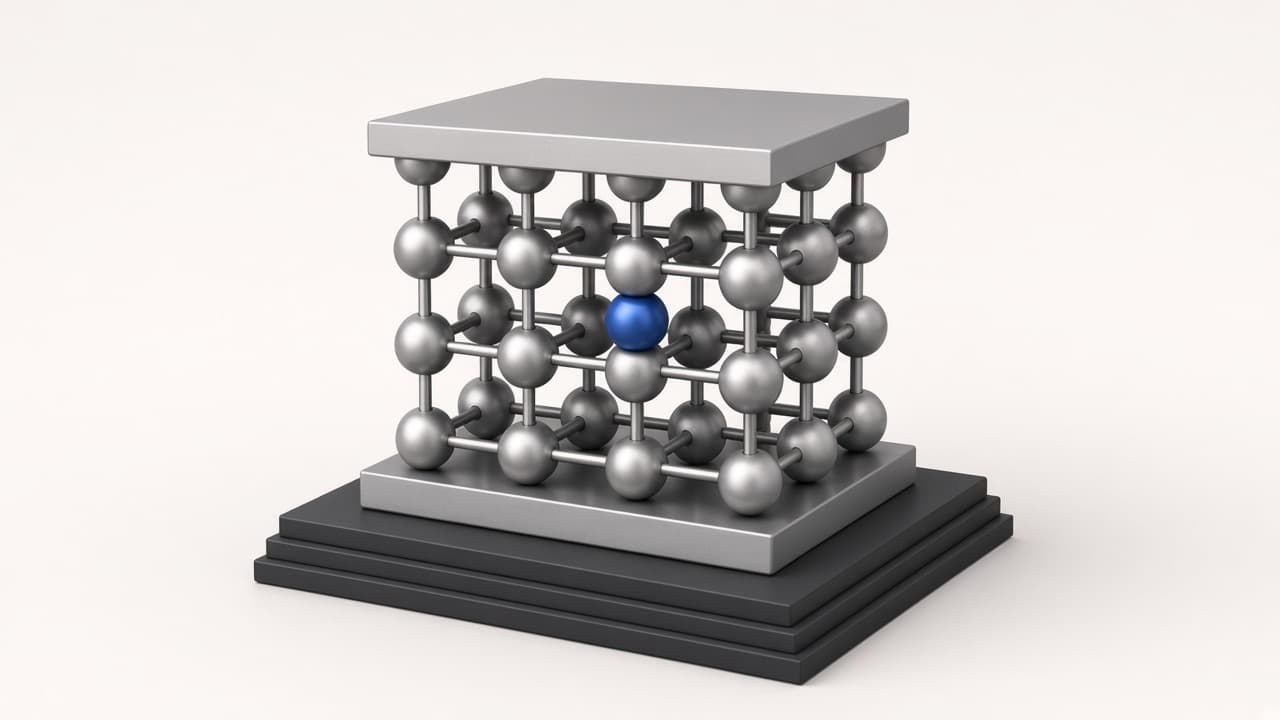
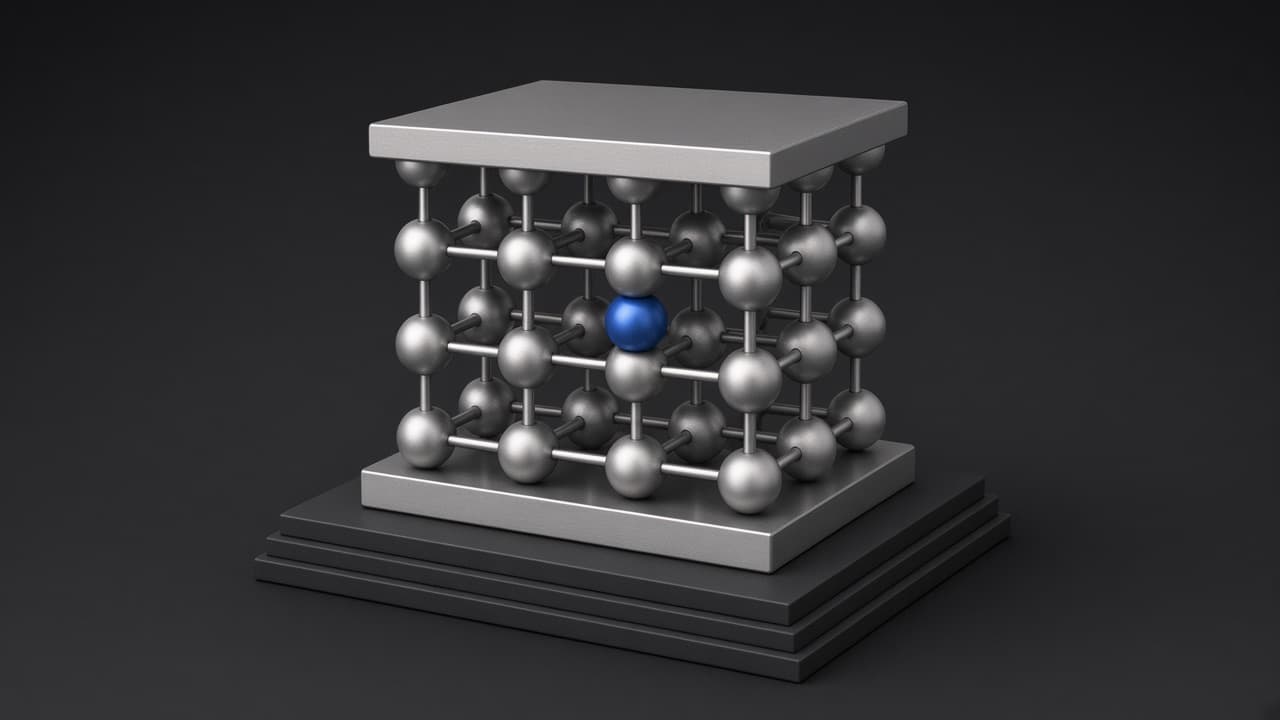
- Actuators and transducers
- Sensors
- Thin-film resonators
- Frequency control
Why this domain matters to your work.
Piezoelectric and dielectric crystals turn motion into charge and charge into motion, and they sit inside actuators, transducers, sensors, thin-film resonators and the crystals that keep electronics on frequency. Many of the strongest actuator ceramics contain lead, and many applications now want it gone, which puts lead-free perovskites such as BaTiO₃ and (K,Na)NbO₃ at the center of the work. AlN, scandium-doped AlN and ZnO films carry acoustic-wave resonators, while quartz, GaPO₄ and LiNbO₃-type crystals serve frequency control, surface-acoustic-wave devices and sensors that run hot.
The strongest lead-free responses tend to appear near phase boundaries, and those compositions often lose their polarization at lower temperatures, so a high piezoelectric coefficient and a high depolarization temperature pull in opposite directions. Coupling, electrical insulation and low loss have to hold together in the same crystal. Thin-film nitrides gain response with scandium but add cost and supply risk, and high-temperature sensor crystals trade sensitivity for stability. Niobium, scandium and gallium each bring price and supply questions a team has to weigh against performance.
A campaign lets your team name the piezoelectric response you need, the temperature it must keep working at, the insulation and the elements you can use, with lead-containing compositions left out from the start. You receive ranked lead-free perovskite, nitride, quartz-type and LiNbO₃-type candidates with estimated piezoelectric coefficient, depolarization temperature, coupling, insulation and cost. The figures are screening estimates and can sit well off measured values for the strongest compositions. Poling, loss, quality factor, frequency drift, fatigue and aging are measured on your samples and devices.
The material families this domain searches.
Each family brings its own structures and chemistry to the search. A campaign can search one of them or compare several under the same targets.
Ferroelectric perovskites
Lead-free perovskites such as BaTiO₃ and (K,Na)NbO₃, chosen for actuators and transducers that need a strong response without lead.
Wurtzite nitrides and oxides
AlN, scandium-doped AlN and ZnO films, chosen for thin-film acoustic resonators such as the filters inside wireless devices.
Quartz-type crystals
Quartz and GaPO₄, chosen for stable frequency control and for sensors that must keep working at high temperature.
LiNbO₃-type crystals
Lithium niobate and its relatives, chosen for surface-acoustic-wave devices and for transducers that run at high temperatures.
The properties a campaign can aim for.
Choose the properties that matter to your work. For each one, say whether a candidate must meet it or should push it as far as it goes, with cost and supply always in view.
- Piezoelectric coefficient
- Depolarization temperature
- Electromechanical coupling
- Electrical insulation
- Cost and supply risk
Starting points for a campaign.
Each starting point sets up a campaign for a common goal in this domain. Begin from one and adjust its targets, or set your own from the start.
Lead-free actuator ceramics
Suits teams replacing lead-based actuators, searching BaTiO₃- and (K,Na)NbO₃-based ceramics for the strongest response.
High-temperature sensor crystals
Suits sensor makers working in hot environments, putting depolarization temperature first so the crystal keeps working hot.
Thin-film resonator nitrides
Suits resonator and filter designers, ranking AlN and scandium-doped AlN acoustic-wave films on coupling, insulation and cost.
Frequency-control crystals
Suits timing and frequency-control applications, searching quartz, GaPO₄ and GeO₂ for crystals that hold a stable frequency.
What you specify, what you receive and where the figures stop.
MS Lattice hands your lab a shortlist to make and test. Its figures are screening estimates and calculations, not measurements of the new material, and each domain says where they stop.
You specify
The piezoelectric response you need, the temperature it must keep working at, the insulation and the elements you can use. Lead-containing compositions are left out.
You receive
Ranked lead-free perovskite, nitride, quartz-type and LiNbO₃-type candidates, with estimated piezoelectric coefficient, depolarization temperature, coupling, insulation and cost.
Before you rely on it
The piezoelectric figures are screening estimates, not calculations for the new crystal, and can sit well off measured values for the strongest compositions. Poling, loss, quality factor, frequency drift, fatigue and ageing are not predicted, and nothing here is a device qualification.
The same four modes work in every domain.
Search from your targets alone, improve a material your team already uses, or watch the engine reach known materials, with the targets as guides or sealed away, to see how well it searches.
Open Discovery
Choose it when you know what the material must do but have no starting structure.
Prototype-Guided Optimization
Choose it when you already have a good material and want to make it better.
Guided Rediscovery
Choose it when you want to watch the engine reach a material you already know.
Blind Rediscovery Benchmark
Choose it when you want to test whether the engine finds an answer it was never shown.
Every candidate arrives with its record.
Each candidate comes ranked against your targets, with its estimated properties and their uncertainty, the checks it passed and a structure file to export, ready for your lab.
Questions teams ask about this domain.
Have a materials target? Tell us what it must do.
Share the material domain, the properties you need and the limits the material must respect. We will show you how MS Lattice would approach it through Norck, from a ranked shortlist for your own lab all the way to finished parts.